


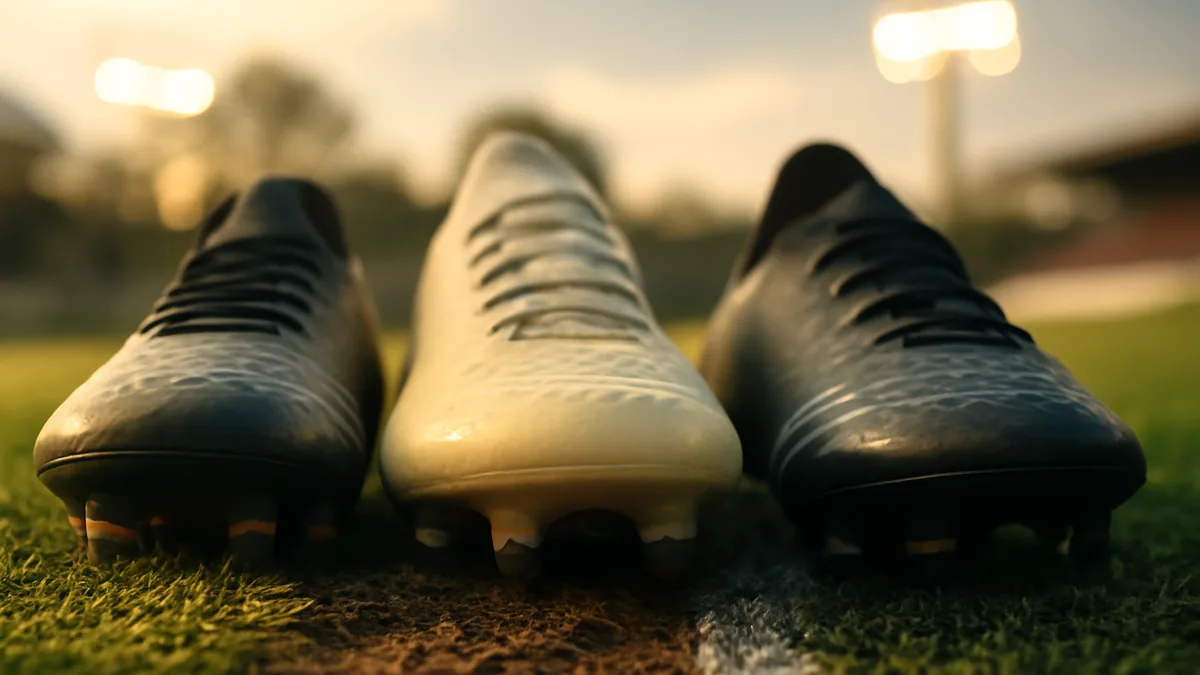
Choosing a stud pattern is about three things: the surface underfoot, the type of traction the player needs, and safety. The wrong soleplate reduces grip, damages studs and increases the risk of ankle or knee injury.
This guide sets priorities for five common groups of soleplates and studs. Each entry gives the plain answer first, then a short explanation of where it belongs and what usually goes wrong when it is misapplied.
Priority list: which soleplate for which surface
FG (firm ground) soleplate
Choose an FG soleplate for natural grass that is neither waterlogged nor rock-hard. FG patterns use a mix of conical and bladed studs designed to bite into compact turf for balance between rotation and traction. Using FG on soft, muddy pitches will let studs clog with soil and lose penetration, while wearing FG on abrasive artificial turf causes accelerated stud wear and reduced shock absorption.
AG (artificial grass) soleplate
Pick AG when most play is on modern 3G or 4G synthetic turf with rubber infill. AG plates spread load across many shorter studs to reduce stud pressure and slippage on the synthetic fibres. Worn or non‑AG studs on these surfaces increase stud abrasion and can lead to unpredictable gripping or excessive torque through the knee.
SG (soft ground) soleplate
Use SG for very soft, wet natural pitches where long metal or removable studs can penetrate deeply. SG gives maximum bite and braking on muddy fields but concentrates stud pressure, which is why removable metal studs are common. Wearing SG into drier or firm surfaces risks levering the foot when studs catch and can damage the soleplate and the pitch.
TF (turf) soleplate
Opt for TF for short, heavily worn artificial turf and hard sneakers-only surfaces. TF soles have many small rubber nubs to increase contact area and abrasion resistance on short-pile turf or indoor courts. Using TF on grass offers almost no penetration and poor rotational release, producing slippage and unstable foot placement.
IC (indoor court) soleplate
Choose IC for hard indoor courts; these soles are flat, non‑marking and engineered for quick changes of direction. IC designs prioritise low-profile tread and grip from sole compound rather than studs, giving consistent traction on wood and synthetic floors. Bringing IC footwear outdoors leads to rapid sole wear and insufficient grip on wet or soft surfaces.
Table: how the five soleplates compare
| Type | Best surface | Typical stud form | Common failure when misused |
|---|---|---|---|
| FG (firm ground) | Natural grass, normal firmness | Mix of conical and bladed moulded studs | Stud clogging on mud; abrasion on artificial turf |
| AG (artificial grass) | Artificial grass with infill | Many short, rounded moulded studs | High abrasion if used on rock-hard surfaces |
| SG (soft ground) | Wet, muddy natural grass | Long removable studs, often metal | Excessive torque and digging on firm ground |
| TF (turf) | Short-pile turf, training fields | Numerous small rubber nubs | Poor penetration on grass; quick wear outdoors |
| IC (indoor court) | Hard indoor courts | Flat, patterned non-marking sole | Insufficient traction and rapid wear outdoors |
How to decide before buying
Start with where most sessions and matches happen. If training is split across surfaces, prioritise match surface first, then training. Consider personal needs: a player who pivots frequently benefits from a soleplate that offers rotational release, while a straight‑line runner needs direct braking and acceleration. Finally, check the pitch condition on matchday; many players carry two pairs to respond to unexpectedly soft or hard ground.
Where people go wrong
Players commonly assume a single pair will suit every pitch. That leads to three predictable problems: studs that wear prematurely, soles that fail to release under rotation, and studs that become clogged with mud or rubber. Another frequent error is fitting long removable studs without testing stability first — a stud that digs too deep on near‑firm ground can create dangerous leverage during cutting actions.
Beginner versus experienced considerations
Beginners should prioritise versatility and safety. A moulded FG or AG option gives predictable traction across the widest range of common surfaces and requires less setup knowledge. Experienced players can choose specialised plates — SG for muddy venues or a dedicated AG for permanent synthetic surfaces — but they must manage stud length, carry spare studs and understand pitch‑specific fit. Experience also informs minute choices: stud shape, sole flexibility and plate stiffness all change how load transfers through the foot.
What to do next
Check the surface type listed in the fixture or on the home club page and match it to the appropriate soleplate category. Inspect studs routinely: moulded studs that flatten or missing removable studs are a clear signal to replace or reconfigure the pair. Finally, if play is mixed, pack a secondary pair matched to the alternative surface and practice transitions so the body adapts to differing rotational release and braking.
Frequently asked questions
Which soleplate is best for 3G artificial turf?
AG soleplates are designed for modern artificial turf with infill. They use many short studs to spread load and reduce pressure on the synthetic fibres, improving grip and lowering stud wear compared with FG or SG types.
Can removable SG studs be used on firm ground?
Removable SG studs are intended for soft, wet fields and provide deep penetration. Using them on firm ground risks excessive leverage through the foot and can damage the studs, soleplate and increase injury risk during cuts.
Do TF soles work indoors and outdoors?
TF soles are built for short-pile turf and hard training surfaces, not for grass or wet conditions. They will wear quickly outdoors and offer poor penetration or rotational release on natural turf, making them an unsuitable all‑round choice.
