


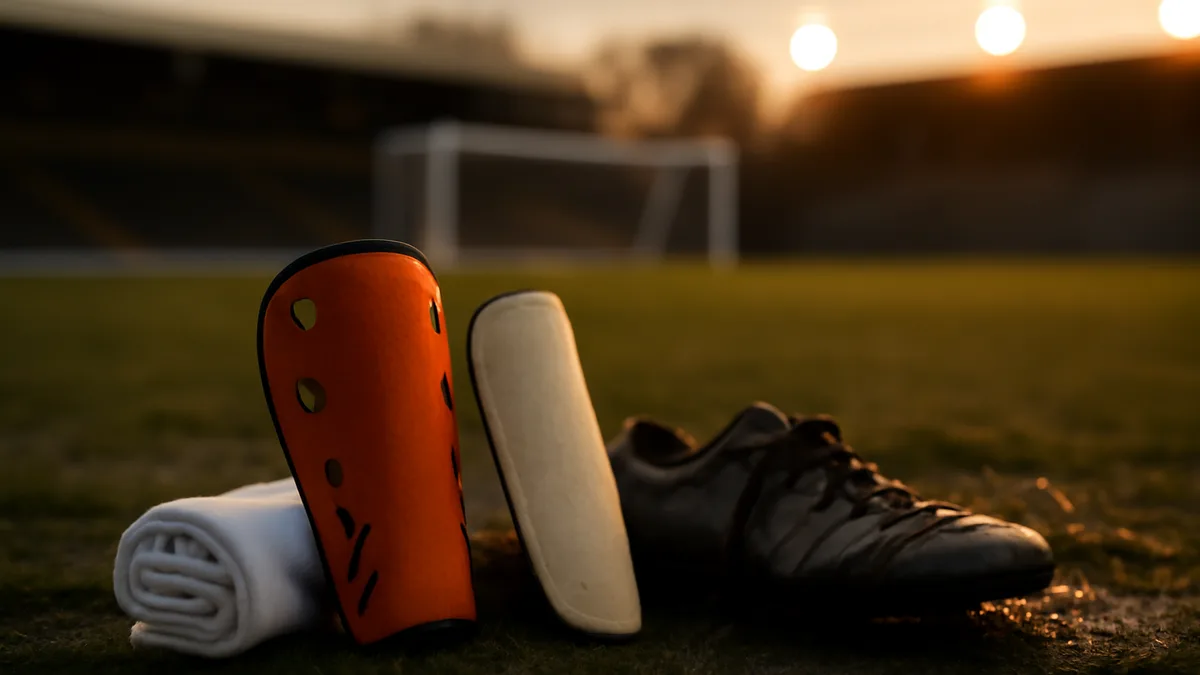
Choosing shin guards comes down to three things: how much protection is needed, how they must fit under the socks, and what the competition allows. Match those constraints to the guard type and to wearer habits before committing to a purchase.
How to decide
Start by establishing the competition rules and the wearer’s playing style. Some leagues and tournaments require rigid protection or ban external ankle blocks; others only insist guards are worn. Next, decide whether the player favours mobility and lightness or prefers covering the shin and ankle fully. Finally, measure for size using height-based guides rather than relying on labelled shoe size, because shin length correlates more closely with body height than foot length.
Priority checklist: the ordered choices that matter
Protection level
Choose the protection level first because it determines type and bulk. Rigid, hard-shell guards give the best deflection against strong strikes and studs but add weight and can transfer shock to the bone if poorly fitted. Thin foam or flexible polymer guards reduce surface force and are lighter, making them preferable for youth players or those who value mobility and less break-in time.
Ankle protection
Decide whether ankle coverage is necessary for the player’s position and injury history. Guards with an integrated ankle cup protect the malleolus and side of the foot but increase size under the sock and can make fitting into tight boots harder. Slip-in or sleeve options without ankle cups keep a low profile and are often preferred by players who wear narrow boots or rely on quick ankle movement.
Attachment method
Pick an attachment system that matches dressing habits and comfort needs. Slip-in guards are simply inserted behind the sock and stay in place by friction; they are quick and low-profile but can shift on hairy legs or during heavy contact. Sleeves use an elastic pocket and offer a more secure hold for longer play durations, while straps or tape provide the most positive fixation at the cost of extra time to put on and heavier feel.
Fit and sizing
Fit by shin length, not shoe size. Measure from just above the ankle to just below the knee and use the manufacturer’s height or length guideline to find the correct size; the plate should cover the area most often struck in tackles. Too-small guards leave the lower shin exposed; too-large units impinge on the knee or top of the boot and can encourage slippage.
Material and shell type
Choose materials to match how the guard will be used and how often it will be replaced. Hard shells—polypropylene or injected plastic—excel at redirecting force and are common in match-grade models, while EVA foam and flexible polymers absorb impact across a wider area and are lighter. Some modern makers use grid-style foam that compresses on impact and springs back, offering a compromise between protection and flexibility.
Profile and boot compatibility
Match the guard profile to the wearer’s boots and playing surface. Low‑profile slip-in guards fit easily into narrow boots and under tight socks; higher-profile guards with ankle cups need more internal boot volume or a larger boot size. Players who train on artificial grass should avoid excessively bulky ankle protection that can snag or irritate during sliding tackles.
Durability and maintenance
Consider how often the guards will be used and how they are cleaned. Hard-shell guards will resist abrasion from studs and artificial surfaces better than thin foam but can crack under repeated high-energy impacts. Removable liners or wash-friendly sleeves extend usable life because the high‑sweat textile parts can be laundered separately from rigid components.
Rules compliance
Confirm compliance with competition rules before buying. Many organisers require guards to be covered by socks and may ban external ankle blocks or hard protrusions; always check the tournament or club rulebook. For formal reference, consult the FIFA Laws of the Game to see the basic equipment requirements and any clarifications on coverings and banned items.
Common mistakes buyers make
- Buying by brand: Choosing purely on make rather than protection and fit often leads to the wrong profile for the boot or the wrong level of ankle coverage.
- Wrong sizing method: Using shoe size instead of shin length yields guards that either sit too high or too low on the leg.
- Ignoring attachment: Assuming any guard will stay put can lead to midgame slippage; check sleeve elasticity or plan to use light tape for a slip-in model.
- Over‑protecting: Selecting oversized ankle cups for a player who values mobility can reduce performance and cause rubbing injuries.
Table: comparing common types
| Type | Primary advantage | Typical drawback | Best for |
|---|---|---|---|
| Slip‑in plate | Low profile and light | Can shift without a sleeve or tape | Speed players and tight boots |
| Sleeve with pocket | Secure, comfortable fit | May trap sweat; needs washing | Training players and long matches |
| Hard shell with ankle cup | Highest deflection and ankle protection | Bulky; can reduce boot compatibility | Physical positions and past ankle injuries |
| Flexible impact pad | Light and conforms to leg | Less deflection on direct studs | Youth players and those prioritising comfort |
What differs for a beginner and for someone experienced
Beginners usually benefit from simple, secure options that balance protection and comfort. A sleeve with a decent foam plate or a well‑fitting slip‑in provides protection without complicating boot choice; ease of use matters because a young or new player is less likely to tape or readjust during sessions. Experienced players should decide by role and habit: defenders and physical midfielders often accept heavier, hard‑shell guards for maximum protection, while attackers and wingers prioritise low profile and freedom of movement. Experienced players also benefit from tailoring fit with light medical tape, different sleeve tensions or specific boot pairings.
Where people go wrong
Buyers often focus on brand or colour and neglect how the guard sits with their boots and socks. That error shows up as slippage, rubbing, or an exposed lower shin at the moment of impact. Another frequent mistake is assuming all ankle protection is the same: integrated ankle cups differ widely in shape and volume, so two guards labelled “with ankle protection” can feel entirely different in the same boot.
What to do next
Measure shin length while wearing the boots intended for match play. Check the competition or club rules on visible protection and ankle cups. Try two types in the store if possible: a low‑profile slip‑in and a sleeve model, and test them with the actual socks and boots to reproduce match conditions. If purchasing online, buy from a retailer with a clear returns policy and be prepared to exchange for a different size or profile. Finally, plan for a short break‑in and a wash routine for textile parts to keep the guards hygienic and effective.
Frequently asked questions
How should shin guards be sized?
Size shin guards by measuring from just above the ankle to below the knee, not by shoe size. Use the maker’s length or height guide and ensure the plate covers the area most exposed in tackles.
Are ankle cups allowed in competition?
Ankle cups are allowed in many competitions but some leagues or tournaments restrict external protrusions or require guards to be covered by socks. Always check the specific competition rules before buying.
Which type prevents slipping the most?
Sleeve-style guards that hold the plate in a pocket are generally the most secure for play without tape. For absolute fixation, straps or light sports tape over a slip-in plate provide the most reliable hold.
