


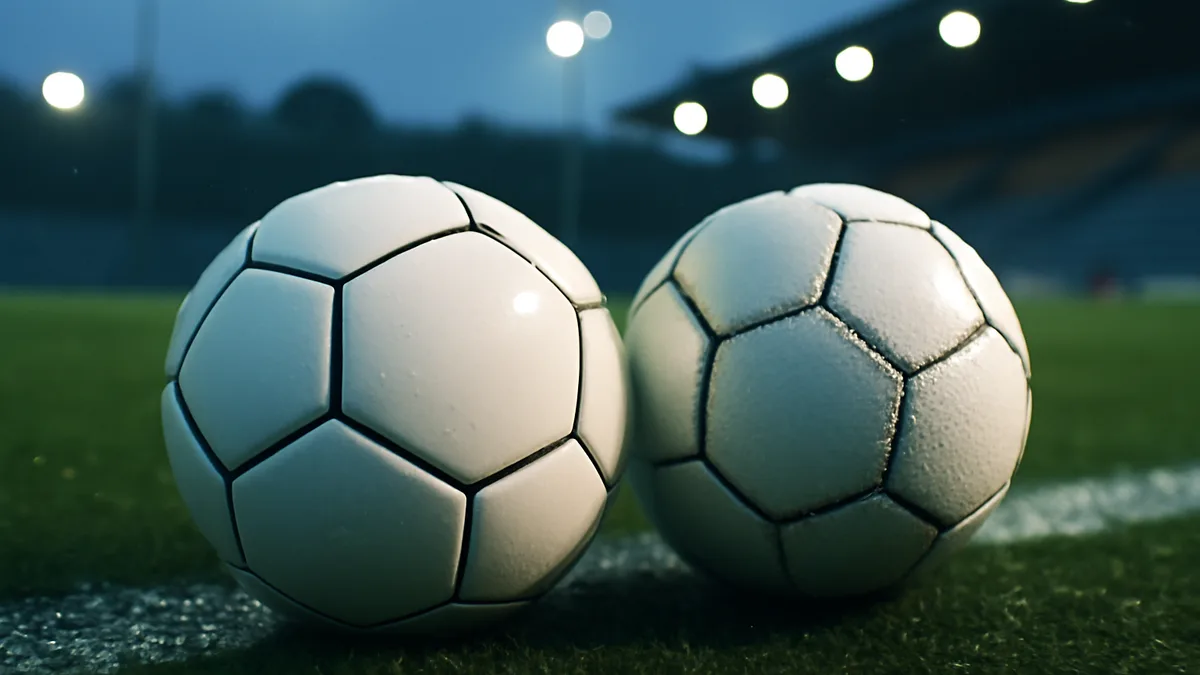
Choosing between a thermally bonded ball and a stitched ball comes down to three things: how the seams are made, how the ball behaves as it takes knocks and wettings, and how much maintenance or replacement a season will need. The same ball can feel different the day it arrives and after a month of heavy training, so match the construction to how and where it will be used.
This guide lists the priorities in order of how often they change a buying decision, then explains the trade-offs a club, coach or serious amateur should expect. It names the construction styles and the failure modes to watch for, and ends with practical next steps for purchase and care.
Priority checklist: ordered factors that decide the buy
Match surface and use
Pick the construction that suits the playing surface and session type. Thermally bonded balls generally keep a more consistent seam profile on dry, even pitches and in matches where precision flight is important, while stitched balls often tolerate rough turf and repeated contact in training without losing their general shape quickly.
Water absorption and wet-weather performance
Thermally bonded panels are sealed at the joins, which reduces water uptake and keeps weight stable in rain. Stitched balls can take on more water where the needle holes and stitching thread cross the outer casing, so they tend to become heavier and feel different after repeated wet sessions unless the manufacturer has used hydrophobic linings.
Seam failure modes
Thermal bonds fail by delamination: the panel edges separate from the glue line, giving a clean split along a seam; this is sudden and usually irreparable for match use. Stitched seams fail by thread abrasion or knot slippage, which can open a seam progressively and sometimes be temporarily stitched again, so the failure mode is often repairable at the pitch.
Consistent flight and surface finish
Bonded panels allow manufacturers to keep a smooth, continuous surface and precise panel alignment, which helps repeatable flight and predictable bounce in nearly-new balls. Stitched balls have a more pronounced raised seam, altering aerodynamics and touch in a way many players prefer for training or for a grippier feel on shots and holds.
Longevity under repetitive contact
Stitched construction—especially balls made with reinforced threads and stronger lining layers—can resist repeated needle abrasion and localised impact better in heavy training cycles. Bonded balls deliver excellent short-term consistency but can show edge wear where the adhesive and outer material mismatch after sustained abrasion.
Repairability and in-season cost
Stitched balls are easier and cheaper to keep on the pitch: open seams can be restitched or patched, delaying full replacement. When a bonded ball delaminates, the typical response is replacement rather than repair, which concentrates cost into fewer, larger purchases across a season.
Manufacturing quality and brand traits
Certain brand lines are consistently thermally bonded at the factory and marketed for match use, while other makers and lines have long used machine stitching for training durability. Names tied to a construction method should be treated as a trait of that line rather than a guarantee of performance across all models.
Comparing the three alternatives
The table below compares thermally bonded, machine-stitched and hand-stitched balls on the axes most buyers care about. These are general tendencies rather than absolute rules for every single product.
| Water absorption | Seam durability | Repairability | Typical feel | |
|---|---|---|---|---|
| Thermally bonded | Low — sealed joins reduce uptake | Good short-term; failure is sudden delamination | Poor — delamination usually not repairable | Smooth, consistent flight and touch |
| Machine-stitched | Medium — varies with lining and thread | Good — designed for heavy, repetitive use | Fair — can be restitched or patched | More pronounced seam, grippier touch |
| Hand-stitched | Medium-high — depends on materials | Very good — robust thread and knotted seams | Good — traditional repairs feasible | Classic feel, often heavier after wetting |
How to decide before spending
Start by matching the ball to the programme, not to a perceived premium label. If a club trains six times a week on abrasive artificial turf, a machine-stitched or hand-stitched ball with reinforced lining will usually cost less over a season because replacements are spread out and repairs are possible. If the priority is match-day consistency, especially in leak-proof, rainy environments, a thermally bonded match ball will hold its flight and surface finish longer in early use, though a single failure often means a complete replacement.
Where people go wrong
Buyers commonly assume bonded means indestructible and stitched means cheap. Both are simplifications: bonded construction reduces water uptake but does not prevent abrasion at panel edges, and stitched balls vary widely by thread, stitch density and lining. Another frequent error is buying solely on brand reputation without checking the construction spec; a brand can sell both bonded and stitched lines, so read the product details rather than the label.
What differs for beginners and experienced players
Beginners and youth programmes benefit from durability and repairability because balls are handled roughly and budgets are constrained; stitched balls that can be restitched or patched are often the pragmatic choice. Experienced players and competitive teams often prioritise consistent flight and feel, making bonded or high-end stitched match balls a better fit depending on weather and surface.
Practical checks at purchase
- Construction tag: Verify whether seams are bonded or stitched on the product label so expectations match the actual build.
- Lining description: Look for mention of multiple lining plies or hydrophobic linings, which reduce shape loss and water uptake respectively.
- Service warranty: Check whether the seller offers a play warranty or a seam-failure policy that covers delamination or stitching faults.
What to do next
Decide the primary use—match, training on grass, or training on artificial turf—and list the two properties that matter most: water resistance and repairability, or consistent flight and surface finish. Inspect product pages or specification sheets for explicit wording about bonded seams, stitch type and number of lining layers, and then buy the construction that matches the programme. Finally, keep a small kit for basic repairs if using stitched balls and schedule a mid-season replacement budget if relying on bonded match balls.
For standards and test protocols, consult the FIFA ball standards and a summary of general ball construction to understand the lab tests manufacturers reference when they claim water resistance or seam strength.
Frequently asked questions
Which ball type absorbs less water?
Thermally bonded balls absorb less water because their panel joins are sealed, keeping weight stable in wet conditions. Stitched balls can take on more water around the needle holes and thread unless the producer specifies a hydrophobic lining.
Can a delaminated bonded ball be repaired?
Delamination is typically a separation of panel edges and adhesive, which is usually not practical to repair for match use. Repair attempts may restore appearance but rarely restore the original flight and structural integrity.
Which construction is cheaper over a season?
Stitched balls often cost less over a season in heavy-use programmes because they can be restitched or patched and are generally more tolerant of repetitive contact. Thermally bonded balls can require full replacement when they delaminate, concentrating expense into fewer purchases.
