


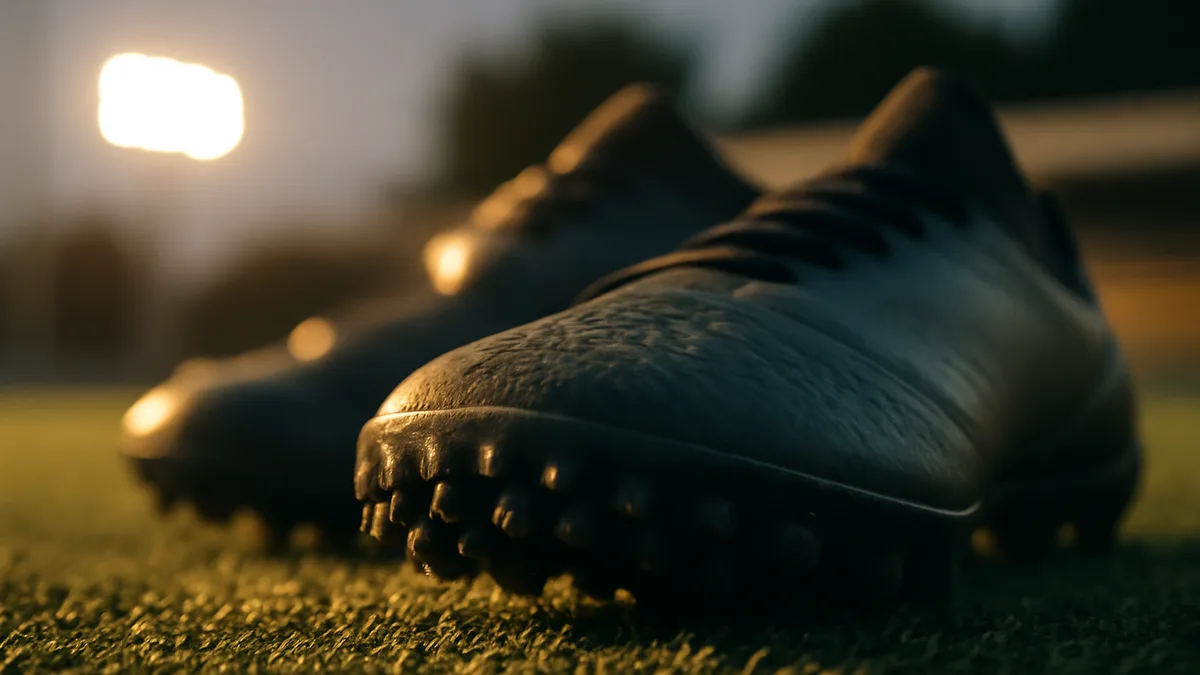
Choosing the right boot for artificial turf turns on two things: how the sole contacts the surface, and how your body reacts to repeated shock and shear. Wrong choices increase joint load and shorten both boot life and player comfort.
Artificial turf varies from short, dense nylon to thicker infilled 3G systems, and each surface needs a different approach to studs, cushioning and outsole flexibility. This guide gives a ranked checklist of what to check, a comparison of the main soleplate types, common mistakes, and how the choice differs for a beginner versus an experienced player.
Priority checklist for turf boots
Surface contact: prefer many small contact points
Choose a sole that spreads load across a larger number of low-profile contact points rather than a few tall studs. Multiple small nubs or short conical studs reduce peak pressure on the foot and cut shear forces transmitted up the ankle and knee when stopping or changing direction on artificial surfaces.
Soleplate type: turf, AG and firm-ground behave differently
Select the soleplate category that matches the pitch type. Turf (TF) soles are low, dense and built for the short, abrasive surface; artificial-ground (AG) plates use more, shorter studs to reduce penetration; firm-ground (FG) studs are taller and can bite on natural grass but on 3G they create point loads that increase joint torque and injury risk.
Stud shape and height: minimise penetration on 3G
Short, rounded studs or many small conical nubs limit grip through shear rather than deep bite. Taller bladed or conical FG studs increase rotational resistance; on a 3G pitch that resistance raises the torsional load on knees and ankles and can feel punishing during quick pivots.
Midsole cushioning: balance shock control and stability
Prioritise midsoles that reduce impact without sacrificing stability under lateral load. Thicker, compressive foams lower repetitive shock from the firmer artificial surface, but excessive softness can let the foot roll; a firmer medial platform or torsion support keeps the foot aligned during cuts.
Fit and last: account for foot shape and motion control
Fit still matters: a narrow last on a wide foot increases pressure; a very loose last allows the foot to slide and increases friction and blister risk. Boots with a stable heel cup and predictable midfoot lockdown reduce internal movement and therefore shear-induced irritation on turf.
Traction pattern for 3G: prefer rotational release
Look for outsole patterns that allow some rotational release instead of locking the foot in place. Sole patterns designed to spread contact and permit micro-rotation protect joints by lowering peak torsional forces during turns and planted cuts on 3G surfaces.
Warranty and expected lifespan: check abrasion and sole guarantees
Warranties for turf boots vary; expect manufacturers to exclude wear from abrasive surfaces while sometimes offering defects coverage. Confirm what qualifies under warranty, because turf abrasion often shortens outsoles; some brands note claims specifically for artificial surfaces and others provide limited coverage for structural defects only. The FIFA quality programme is the reference many clubs and facilities use when deciding which turf types pair with which boot categories.
Comparing soleplate types
| Characteristic | Firm-ground (FG) moulded | Artificial-ground (AG) | Turf shoes (TF) |
|---|---|---|---|
| Stud height | Generally taller | Shorter, more numerous | Very low profile nubs |
| Best surface | Natural, dry grass | Infilled 3G and firmer artificial | Short-pile synthetic and indoor turf |
| Joint impact | Higher on 3G due to point loads | Lower than FG; better torsional release | Lowest; spreads pressure evenly |
| Typical use | Match play on grass | Regular training and matches on 3G | Training on short synthetic fields |
Where people go wrong when buying for turf
The most common mistake is treating artificial turf like natural grass and buying FG studs for perceived extra grip. On 3G that extra grip is a false economy: taller studs dig and lock, which raises torsional loads and increases the chance of joint injury. Another frequent error is prioritising cushioning alone; excessive foam without platform stability allows the foot to roll, trading protection from impact for instability during direction changes. Finally, buyers often ignore outsole abrasion. Artificial surfaces are more abrasive than grass, and many boots develop worn studs, thinned soles or delamination sooner when used exclusively on turf. Checking warranty terms for abrasion or sole separation clauses prevents surprise denials when a shoe fails early under heavy turf use.
Choosing by experience level
Beginners should start with turf-specific shoes or AG plates that emphasise low, distributed contact and stable midsoles. These provide predictable traction and lower joint stress while skills and movement patterns develop. Avoid tall studs and highly aggressive bladed outsoles; they will make stopping and turning feel stiff and can cause discomfort for players unaccustomed to concentrated loading. Experienced players can favour AG plates when moving fast on 3G because those plates balance traction and release, but they must evaluate torsional feel before committing. Players with a history of knee or ankle problems should prioritise rotational-release patterns and stable forefoot platforms, and should consider a consultation with a clinician or physiotherapist about how their movement patterns interact with a given sole.
What to do next
- Identify the pitch: confirm the turf type at home and regular venues, and match it to TF or AG categories.
- Try the feel: test for secure lockdown, low stud penetration and a balance of cushioning plus platform stability in short drills.
- Read the warranty: check whether abrasion or sole separation is covered and note any exclusions for artificial surfaces.
- Rotate options: keep a pair for turf and another for natural grass if switching surfaces often to protect joints and extend boot life.
The term artificial turf appears across pitch specifications and product descriptions; use it when confirming the surface before purchase so the boot choice matches reality rather than assumption.
Frequently asked questions
Are firm-ground studs safe on 3G?
Firm-ground studs are not ideal on 3G because their taller, concentrated contact points increase torsional and impact forces, which can raise the risk of knee and ankle strain during pivots.
How does an AG soleplate differ?
An AG soleplate uses more, shorter studs and a layout designed to spread load and permit micro-rotation, which lowers peak joint torque on infilled artificial surfaces compared with FG studs.
Will warranties cover turf wear?
Many warranties exclude normal wear from abrasive turf surfaces and only cover manufacturing defects; buyers should read exclusions carefully and confirm whether sole separation or excessive abrasion is covered.
