


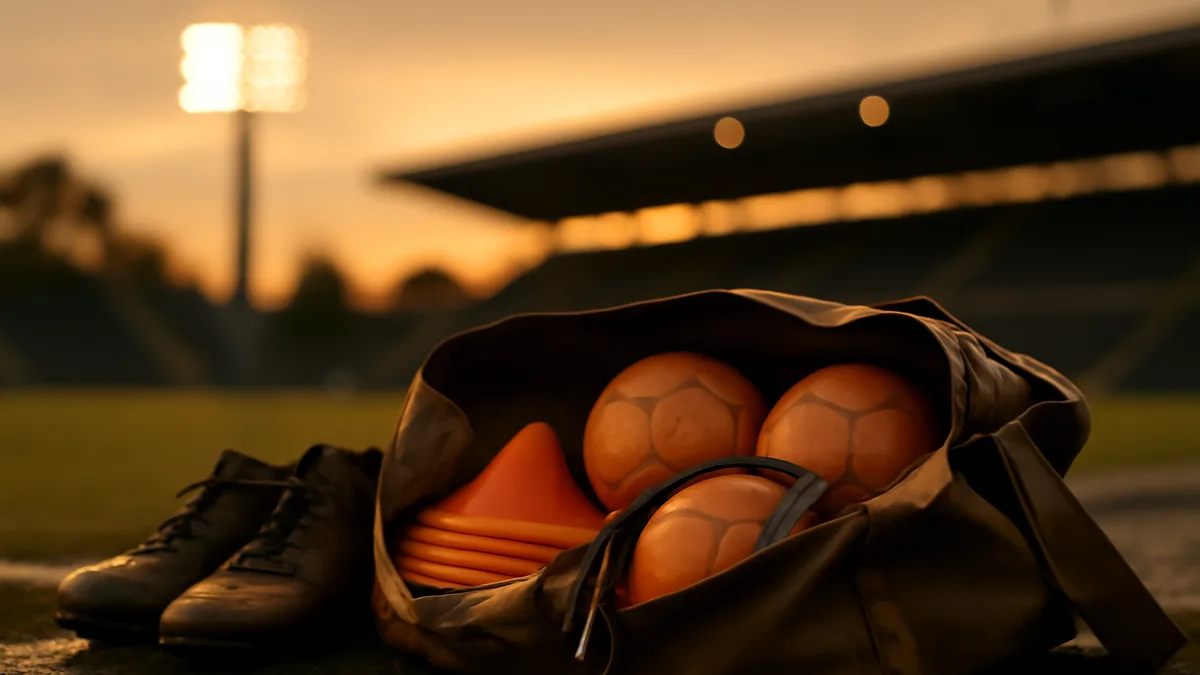
Packing a kit bag is a decision about priorities: safety, session design and durability. The contents must cover immediate needs on the pitch, the instruments a coach uses to teach, and a handful of extras that keep sessions running when things go wrong.
This guide lays out the choices in order of importance so a coach can build a usable bag without overpacking. Each point stands alone so a coach can scan to the items they care about most.
How to decide what goes in the bag
Decide by three questions: what protects players, what enables the session plan, and what keeps the group moving. Protection covers first response and weather; enabling covers balls, bibs and tools for instruction; keeping the group moving is about backups and spares. Rank those needs against how often the coach runs with the same group and the pitch type used regularly. A youth coach running two weekly sessions on artificial turf needs different shoe spares and more balls than an adult 11v11 coach working once a week on grass.
Durability and ease of replacement are the next layer. Choose items that tolerate rough handling and can be replenished locally. For consumables — markers, cones, tape, hand sanitiser — prefer standard sizes and colours so they are interchangeable. For bespoke items — a specific whistle, a branded clipboard or a training vest cut — pick features that solve recurring problems: a lanyard that won’t tangle, a clipboard with a dry-erase panel, or bibs in two contrasting colours with heavy stitching.
Common mistakes coaches make
Overpacking is the most common error. Coaches often carry duplicate versions of the same thing rather than the right spare: two identical whistles, several full-size clipboards, or too many coaching apps chained to a phone. That wastes weight and attention. Underpreparedness is the mirror mistake: no spare ball, no replacement bibs in a different colour, or no basic first response supplies. Balance spares against frequency: pack a spare ball and a set of extra bibs before packing a second clipboard.
Another frequent problem is the wrong match between equipment and surface. Boots and inflation pressure vary between natural grass and artificial turf; cones, poles and portable goals wear differently on abrasive surfaces. Finally, neglecting maintenance shortens the life of good kit: dirty bibs, improperly stored balls, unrepaired nets and dead batteries turn reliable items into failures mid-session. A small bag dedicated to cleaning and repair items prevents this.
What a session actually needs (the essential list)
The numbered sequence below carries the order coaches most often need to prioritise. Each point names the item and explains the choice in two or three sentences so it can be used as a standalone decision aid.
Balls and inflation
Balls must be the right size and properly inflated for the age group and drills planned. Carry at least one reliable match ball plus two spares so a puncture or a lost ball does not interrupt a session. Store a pump and a pressure gauge; check balls before drills and adjust pressure to the surface and the players’ age.
Bibs and training vests
Bibs provide clear visual teams and must contrast with match kits and each other. Carry multiple sets in different colours and sizes so small players and larger adults are covered. Select bib material that breathes and withstands repeated washing; heavy stitching at the seams prevents mid-session failures.
First response supplies
Have a compact first aid kit that covers bleeding control, basic bandaging and blister care. Include disposable gloves and sterile dressings and check contents before every block of sessions. Keep the kit accessible and ensure someone on staff knows how to use its contents; local guidelines on first aid and sport are the right standard to follow for minimum items.
Whistle and timing devices
A reliable whistle and a visible timing method are essential for session flow. Choose a whistle with a clear, sharp tone that is comfortable to use for long periods; have a spare on a different lanyard in case one is dropped. Use a stopwatch, a wristwatch with a large face, or a phone app on flight mode so interruptions are avoided.
Session board and notes
A whiteboard or clipboard with a dry-erase panel keeps instructions clear and speeds transitions between drills. Carry removable markers in contrasting colours and a small notepad for attendance and individual coaching points. A magnetic board is useful for positional work when weather permits, while laminated drill cards help with quick reference during dark or wet sessions.
Field-marking and training aids
Cones, poles and small goals allow coaches to lay out a range of drills quickly. Choose cones for short technical work and taller poles for dribbling lanes and directional cues. Keep a compact roll of marking tape for temporary lines and an elastic cord or bungees for anchoring when winds are strong.
Clothing and weather protection
Spare layers and waterproofs matter more than brand names: players who are warm and dry learn better. Include extra base layers, thin gloves, and emergency rain jackets sized to cover a range of players. Also pack a few lightweight thermal blankets or ponchos for emergency shelter or for players who must leave the field cooled down.
Hydration and hygiene
Hydration solutions depend on local rules and the age group, but always carry spare water bottles and hand sanitiser. Have a plan for rubbish and used tape or dressings so the pitch is left clean. For sessions with many substitutes or rotating groups, a small cooler or insulated bag keeps bottles palatable on hot days.
Repair and spares kit
A repair kit extends the life of nets, balls and clothing. Include simple items: strong tape, spare shoelaces, needle and thread, cable ties and a multi-tool. Keep a small sewing kit and a roll of duct tape in a labelled pocket so common failures get fixed within minutes.
Comparing ball types and what to choose
Balls differ by surface suitability, durability and feel. Natural leather balls behave differently from synthetic panels on wet surfaces, and training balls built for durability will feel firmer than match balls designed for flight and softer touch. Match the ball type to session aims: durable, cost-effective balls for repetition work; softer, higher-feel balls for technical finishing drills.
| Type | Durability | Touch and feel | Best use |
|---|---|---|---|
| Durable training ball | High | Firm | Repetition drills and small-sided games |
| Match-style ball | Moderate | Responsive | Finishing, passing accuracy and match simulation |
| Soft/clinic ball | Low | Very soft | Young children, finishing drills with less force |
Beginner coach vs experienced coach: what changes
Beginner coaches should favour multipurpose, low-maintenance items and more spares. That means extra balls, a complete set of bibs in several sizes, and a clearly stocked first aid kit. They should also carry a simple session planner and a small selection of drill cards so the session can be steered without heavy in-the-moment improvisation.
Experienced coaches often pare the bag back to essentials and add specialised tools that match their methods: angled poles for specific passing patterns, a radar for measured shooting, or a custom clipboard with drill progressions. They also tend to carry fewer spares because they know where to source replacements locally. Both groups benefit from the same basic items; the difference is the degree of redundancy and the range of specialised aids.
Where to store, maintain and rotate kit
Keep consumables organised in small pockets and label spares so replacements are visible at a glance. Wash bibs after heavy use and air-dry balls at ambient temperatures to avoid glue failures. Schedule a short bag check weekly: top up first aid supplies, replace broken pegs or poles, and add batteries to timing devices. A short inventory sheet in the bag saves time and prevents forgotten items when moving between venues.
What to do next
Open the bag and run a quick inventory against the essentials list above. Replace any missing first aid items and add at least one spare ball and a set of contrasting bibs. After that, select one or two extras that solve the session’s recurring problem — better cones for dribbling zones, a waterproof clipboard for autumn, or a small repair kit — and practise using them in a training run so they become part of the routine.
- Pack light: Remove duplicate items that serve the same function before adding specialised tools.
- Check weekly: Make a fast visual check after the last session of the week to prevent surprises.
- Train with the kit: Use new tools in a low-stakes setting so they work in match-ready conditions.
The phrase “Laws of the Game” points coaches to official match rules that influence ball size and match equipment. The phrase “first aid equipment” above links to recommended contents and stocking guidance for basic medical response in sport.
Frequently asked questions
What must be in a coach’s first aid kit?
A coach’s kit should include dressings for bleeding control, adhesive tape, sterile wipes, disposable gloves, blister plasters and basic bandages. Local guidelines and the club’s medical policy determine any additional requirements for sports-specific injuries.
How many spare balls should a coach carry?
Carry at least one match-quality ball plus two spares to cover punctures, lost balls and rotation between drills. The number increases with group size and the frequency of small-sided games where multiple balls are used simultaneously.
Which bibs are best for mixed-age groups?
Choose bibs in several sizes and at least two contrasting colours with sturdy stitching and breathable fabric. Elasticated hems or a range of sizes prevent oversized bibs interfering with movement for younger players.
