


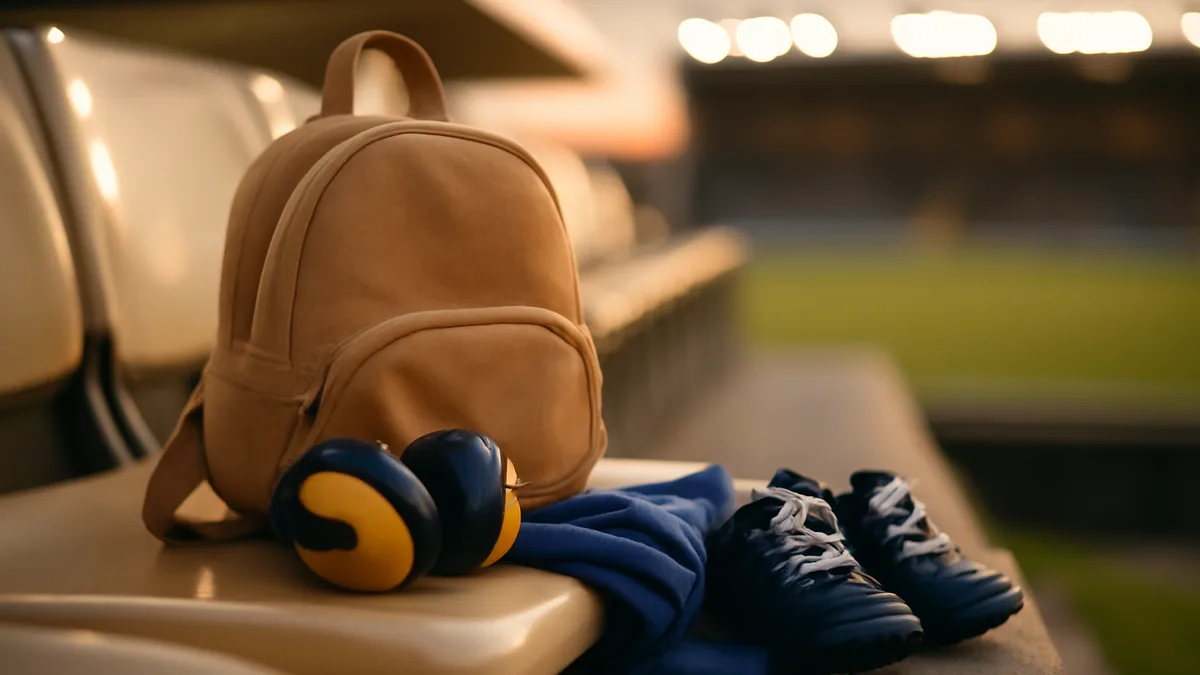
Taking children to a live match is about three choices: how long to stay, how loud it will be, and how independent the child will be. Those three decisions determine what to buy, what to pack and how to time the trip.
This guide prioritises the practical purchases and preparations that actually change the experience. It names product types and stable brand associations where that helps the decision; it avoids model numbers, prices and claims that need testing.
How to decide before spending
Decide how long the child will be at the stadium, how close to the pitch the group will sit, and how much sensory stimulation the child tolerates. A toddler who will only last an hour needs very different kit from a school-age fan who plans to watch the whole match; short visits favour compact, portable items, while full-day trips benefit from a daypack, spare clothing and a proper lunchbox. The likely proximity to the crowd affects noise protection and the type of seating cushion or booster needed; seats near loud sections need better hearing protection, while family areas often moderate volume and allow simpler solutions.
Set a non-negotiable boundary: if the child cannot handle the environment, the alternative is to buy a ticket for a later date, not to improvise on the day. That keeps the purchase practical: buy what will actually be used rather than a full festival of kit for a one-off short visit.
Priority checklist
Tickets and age policies
Secure tickets that match the child’s age and admission rules because age bands affect both price and access. Check whether the stadium requires a child ticket, allows lap infants, or enforces free entry up to a particular age; those rules also determine whether an extra seat or a booster is necessary.
Timing and arrival
Arrive earlier than usual to allow time for entry, toilet breaks and a calm acclimatisation to the stadium. Early arrival also gives a better chance to avoid queues and to use quieter concourses, and it enables a predictable routine around warm-ups that many children find reassuring.
Ear protection
Protect hearing with devices chosen for the child’s age and tolerance rather than brand names alone. For infants and toddlers, over-ear earmuffs provide consistent attenuation and are easier to keep on; for older children, high-quality foam or silicone earplugs can be more compact and sit less intrusively.
Comfortable seating aids
Choose seating aids that match the stadium seat shape and the child’s size to avoid slipping and to improve sightlines. Simple booster cushions with a non-slip base and low profile are usually the most useful purchase because they work for a range of seats and double as a back cushion on hard benches.
Food and hydration
Bring familiar, non-perishable snacks and a refillable water bottle because stadium concessions are often crowded and limited in child-friendly options. A leakproof bottle and sealed snacks prevent mess and remove the pressure to queue for food during short attention spans.
Weather and clothing
Prioritise layered clothing and a compact waterproof because weather changes at open-air venues are common and spare layers prevent a short trip turning unpleasant. A lightweight, packable rain layer beats a bulky coat on public transport and fits easily into a daypack.
Safety and identification
Give the child a simple ID card or wristband with a contact number and brief medical notes because lost-child protocols work faster with immediate information. Also agree on a clear meeting point before entering so that everyone knows where to return if separated.
Transport and exit plan
Choose transport that minimises transfer stress — direct routes and private drop-offs reduce walking and waiting. Always have an exit plan that allows leaving early if the child becomes distressed; that plan changes the value of a refundable ticket or an easy-to-reach gate.
Comparing ear protection options
Different ear protection types suit different ages and behaviours; the table below compares common alternatives on the practical axes that matter: noise reduction consistency, comfort for long wear, reusability and portability.
| Option | Noise reduction | Comfort for long wear | Reusability / care |
|---|---|---|---|
| Over-ear earmuffs | Consistent across frequencies and infant-friendly | High for short to medium periods; choose padded cups for longer wear | Designed for repeated use; wipe clean and store away from crushing |
| Foam earplugs | Good low-frequency reduction when fitted correctly | Lower comfort for long wear; may irritate very young ears | Often single-use or short reusable life; keep spare pairs |
| Silicone premoulded plugs | Moderate reduction and consistent if size fits | Comfortable for many children and easier to insert than foam | Reusable with cleaning; store in a small case |
Where people go wrong
Parents often buy too much or the wrong type of kit. A bulky coat, a novelty noisy toy and a full picnic are common culprits: they make transport harder, add to stress at gates and are rarely all used. Another frequent mistake is assuming older siblings will manage children on their own; assign a specific adult responsible for each child and make that supervision explicit.
Another error is ignoring the stadium’s facilities and policies. Family sections, buggy parks and quiet rooms exist at many venues but are inaccessible unless the party plans around them. Check whether the stadium provides bottle warming, baby-change facilities or quieter seating zones before assuming those conveniences will be available on arrival.
What differs for a beginner and for someone experienced
Beginners should focus on simplicity: one daypack with the essentials, a clear exit plan and conservative choices about seating and timing. Experienced match-goers can prioritise comfort upgrades such as a better cushion, a compact binocular or a more sophisticated ear protection system because they understand how long the child will stay and how they behave in crowds.
Experienced parents also use small rituals — a snack at half-time, a familiar seat choice — to create predictability. Those rituals reduce the chance of a meltdown more than any single piece of kit because children respond better to routine than to novelty.
What to do next
Make three quick decisions now: how long the child will attend, where the group will sit, and what the noise tolerance is. Buy one hearing-protection type that matches the child’s likely tolerance, pack a daypack with a spare layer, snacks and ID, and set a clear meeting point before entering the turnstiles.
On matchday, arrive early, stick to the planned exit trigger, and prioritise the child’s comfort over completing the entire match. If the setup does not work, leave early and treat the visit as a learning step for the next trip.
stadium safety
Frequently asked questions
What ear protection is best for toddlers?
Over-ear earmuffs are usually the best starting point for toddlers because they provide consistent attenuation, are simple to put on, and are harder for a young child to remove. They also tolerate movement better than foam plugs and can be wiped clean between uses.
Can infants attend without a seat?
Some venues allow lap infants under a specified age but policies differ widely and affect safety and comfort options. If a seat is not provided, factor that into the length of stay and whether a harness or lap booster is needed for sightlines and security.
What should be in a child matchday daypack?
Pack a lightweight waterproof layer, a sealed snack, a refillable water bottle, spare underwear and a simple ID with a contact number. Also include ear protection and a small first-aid item like plasters because those items resolve most common matchday problems.
