




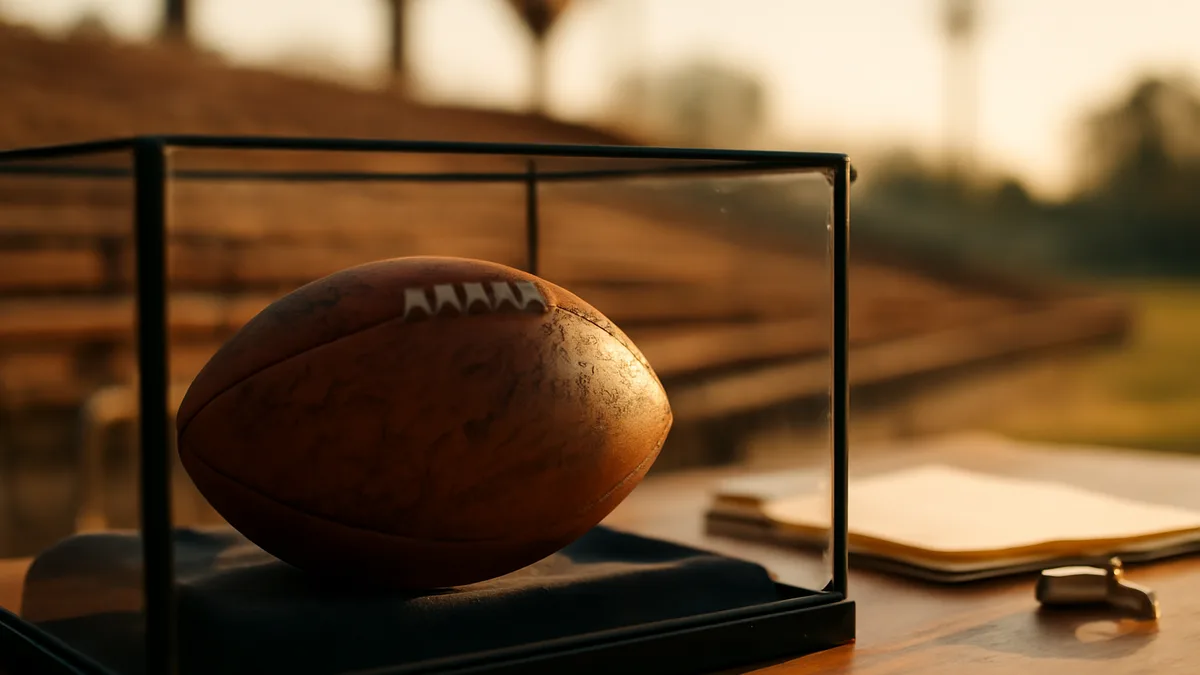
Buying sports memorabilia is a decision about evidence. The value of a signed ball, jersey or card rests on three things: who handled it, what documentation exists, and how that documentation can be checked independently. That triangle — chain of custody, verifiable paperwork and third‑party proof — is what separates a collectible that holds value from one that is a gamble.
This guide gives a priority sequence of checks to run before spending money. The list focuses on what actually improves certainty, names the kinds of paperwork that matter, and flags common seller claims that do not. It closes with practical next steps for verification and payment.
How to decide before the sale
Deciding whether to buy depends on risk tolerance and resale intent. If the purchase is for personal display, a lower threshold of proof may be acceptable; if the purchase is an investment, insist on independently verifiable evidence. Think in terms of how easy it will be to prove authenticity to a third party in the future: photograph evidence, witnesses who can be contacted, and unbroken custody records are the core assets of a collectible.
Priority checklist: the things that raise confidence
Below are the checks ordered by how much they change the certainty of authenticity. Treat them as a sequence: the top items either provide immediate confirmation or reveal when to stop. Each heading gives the single answer first, then explains why it matters.
Third‑party examination
Authentication by a reputable third party is the single most useful verification step. Firms that specialise in handwriting, ink and material analysis can produce a report an independent buyer will accept, and many keep searchable databases of inspected items. Third‑party reports are not infallible — experts disagree and methods evolve — but they are far more reliable than seller‑issued paperwork alone because they create an independent record and, in many cases, a physical tag or serial number that can be checked later.
Direct provenance
A clear chain of custody that links the item to the player or event is extremely valuable. Provenance is strongest when it names institutions or witnesses who can still be contacted, such as team equipment managers, charities that handled the item, or established auction houses. A continuous, documented trail of owners and transactions reduces the probability that a signature or game use claim is fabricated.
Photo or video evidence
Visual proof of the item being signed or used at an event is highly persuasive. A photo showing the item in the player’s hands at the moment of signing or in a game setting ties object to action in a way paperwork cannot. Timestamped digital images, high‑resolution shots of unique wear patterns, and matching player kit or stadium backdrops all strengthen the case.
Holograms and tamper tags
Manufactured tamper‑evident stickers or serial holograms add a layer of security when backed by a checkable registry. These are useful because they can be matched against an issuing company’s online database, but only when the issuer is known and credible. A hologram from an obscure maker that provides no lookup system is little better than a sticker; the issuer’s reputation is what gives the feature value.
Certificate issued by the seller
A certificate of authenticity rarely proves origin by itself. Seller COAs are common and often genuine, but they are also the easiest document to fabricate. Treat a seller COA as a starting point: confirm the signer of the COA, cross‑check any registration numbers, and look for other independent evidence before relying on it for high‑value purchases.
In‑person witness or provenance statements
A signed statement from someone who directly witnessed the signature or the game use carries weight when the witness is credible and contactable. Longstanding professionals — team staff, established photographers, or auction-house specialists — are stronger witnesses than anonymous sellers. Lone or unverifiable witnesses reduce confidence, because claims cannot be rechecked later.
Material and manufacturing checks
Examine the item itself for period‑correct materials, maker marks and construction details. Jerseys, balls and gloves have manufacturing traits that experts recognise; modern replicas often differ in stitch pattern, fabric weave or label placement. Material checks are especially important for items claiming game use, where wear patterns and repairs should match the claimed history.
Provenance gaps and buyback clauses
Contracts or written buyback clauses from reputable sellers shift risk back to the vendor and are worth their weight when available. A seller willing to guarantee authenticity with a contractual remedy shows confidence and provides recourse if later examination fails. Conversely, large and unexplained gaps in the history — periods where the item’s location is unknown — reduce value and should prompt either a lower offer or a walkaway.
Price‑backed verification and appraisal
Getting an independent appraisal or a pre‑sale verification certificate can be decisive for expensive items. An appraisal does not authenticate a signature by itself, but combining appraisal with independent testing (e.g., ink analysis or photo matching) creates a more complete evidentiary package. For purchases being financed or insured, documented appraisals and verifiable authentication are often required.
Common mistakes buyers make
Buyers often accept convenience over proof. The largest single mistake is relying solely on a seller’s statement or a glossy COA without independent corroboration. Another frequent error is assuming any hologram implies legitimacy — some are trivial to reproduce. Lastly, overlooking the long‑term ease of verification is costly: a good authentication that can be looked up decades later preserves value, while undocumented claims fade as memories and contacts disappear.
What differs for a beginner and for an experienced collector
Beginners should prioritise traceable, simple-to-verify items: pieces with photographic evidence, established third‑party reports, or auction house provenance. Experienced collectors can accept more complex provenance if they have access to experts and networks who can validate the claim. Experience also changes how to weigh defects: a seasoned buyer may value rare game‑used wear that looks authentic even when paperwork is incomplete, while a novice should treat such purchases as higher risk.
Table: comparing authentication methods
| Method | Trust (typical) | Ease to verify later | Primary weakness |
|---|---|---|---|
| Third‑party examination | High | Usually searchable | Expert disagreement |
| Photo or video evidence | High | Permanent if original media kept | Can be cropped or misattributed |
| Provenance chain | High when continuous | Good if witnesses remain contactable | Gaps undermine it |
| Holograms/tamper tags | Medium | Good if issuer maintains registry | Issuer credibility varies |
| Seller COA | Low to medium | Poor unless backed up | Easy to forge |
What to do next
Before completing a purchase, run the highest‑value checks available: request third‑party verification, ask for photographic proof, and verify any claimed provenance contacts. If the seller resists independent checks or refuses to provide documentation, treat that as a major red flag. If the item passes the checks and the purchase is significant, obtain a written return or buyback promise and keep digital and physical copies of every document and image. Those steps preserve the item’s future market value and make any later authentication straightforward.
Check the provenance of the item and consult databases or experts when in doubt. For background on why certificates are used and how they are defined, read about the history of the certificate of authenticity.
Frequently asked questions
What makes a memorabilia COA worthless?
A COA is weak when it cannot be independently verified or when the issuer is anonymous. Without a traceable issuer, registration number or supporting evidence such as photos or third‑party reports, the COA offers little proof of origin.
How does provenance affect resale value?
Continuous, documented provenance raises buyer confidence and therefore value, because it links the item to credible hands or institutions. Gaps or unverifiable owners reduce liquidity and mean a lower price or longer time to sell.
When is third‑party authentication necessary?
Third‑party authentication is essential for high‑value purchases or items with disputed signatures and when the buyer plans to resell. It creates an independent record and a verifiable serial or report that future buyers can check.


