




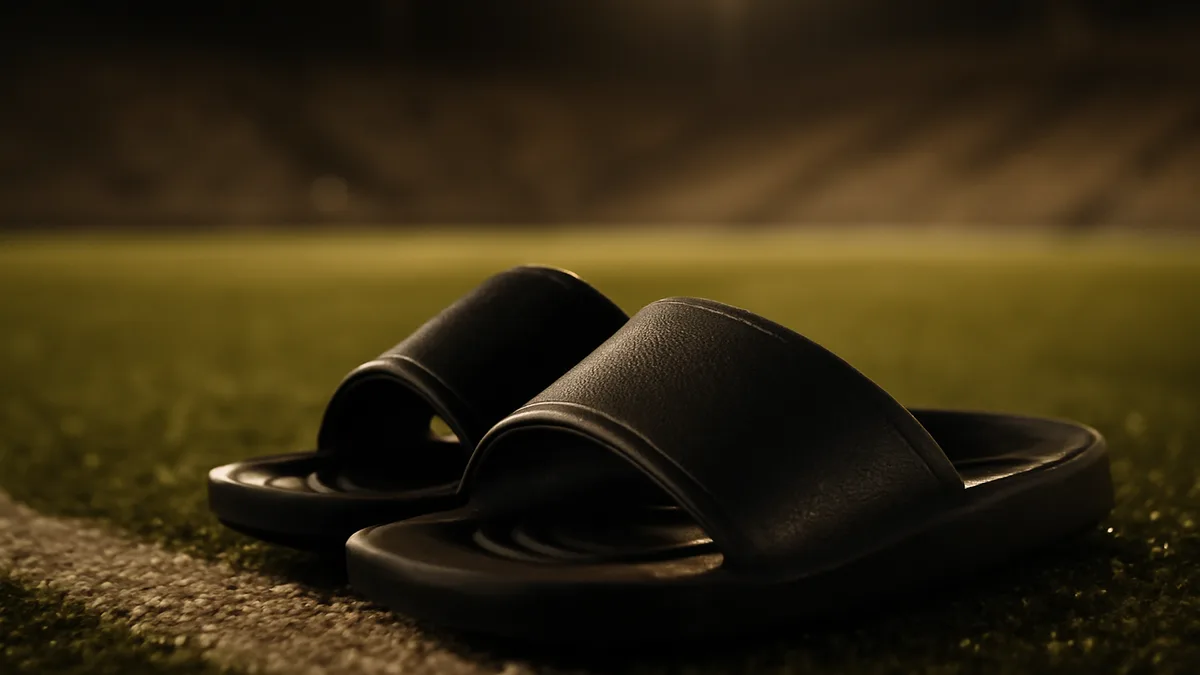
Recovery footwear exists to reduce load and help the foot and lower limb feel better after training or competition. It does not repair muscle damage, speed tissue healing, or replace a planned recovery programme; it changes how forces pass through the foot while the athlete rests or walks short distances.
This guide focuses on recovery slides for athletes: what they do, what they cannot do, how to match one to a player’s foot and routine, and how to size them so they work as intended.
How to decide which function matters
Start by naming the recovery task. Most athletes want one of four outcomes: impact cushioning for sore feet, gentle compression and warmth after long travel, arch support for plantar-related pain, or simple ease and breathability for a quick cool-down. Slides specialise: some give thick underfoot cushioning, some offer contoured footbeds that cradle the arch, and some are just a quick-on option with a soft strap. Decide which outcome is primary before evaluating materials, structure or brand.
Common mistakes athletes make
People often pick recovery footwear on looks or brand alone. The frequent result is a slide that feels comfortable for five minutes but fails for the actual need: a soft flatform that lacks medial support will not help someone with arch soreness, and a heavily cushioned model with no heel lockdown will cause friction in long walks. Another error is assuming a recovery slide should fit like a performance shoe; too-large slides let the foot scrabble, creating tendon strain rather than preventing it.
What beginners and experienced athletes choose differently
Beginners normally need simplicity: a soft, stable slide that protects bare feet in locker rooms and on short walks. Experienced athletes are more likely to target a specific mechanical deficit — using a contoured slide for arch pain or a dense midsole for chronic heel soreness — and to rotate several pairs depending on travel, recovery massage or day-to-day load.
Key checks in priority order
Arch support — choose contour if pain is present
If plantar or medial-arch pain is the complaint, a contoured footbed that provides visible arch lift is the necessary starting point. Contours reduce strain on the plantar fascia and distribute pressure along the midfoot. For routine post-exercise comfort without pathology, a modest contour is usually enough; rigid orthotic-style support is for diagnosed conditions or guidance from a clinician.
Sizing — aim for a secure, slightly forward fit
Slides should not be oversized. Choose a fit that leaves about a thumb-width of space in front of the toes with minimal heel slip. Too-tight slides cause pressure hotspots; too-loose slides force toe-grip and increase tendon load. When in doubt, size toward a firmer fit rather than extra length, and allow for a thicker sock or short walk when testing.
Cushioning — match density to the task
Cushioning ranges from plush foam that isolates impact to dense foam that returns energy and stabilises the foot. Use softer cushioning for immediate soreness after hard impact sessions and firmer, more responsive midsoles for long travel or standing shifts where stability matters. Thickness alone does not equal comfort; the foam’s density determines whether the slide feels collapsed or supportive.
Heel cup and lockdown — prevent scrabbling
A defined heel cup and an effective strap reduce heel lift and lateral movement. A shallow or non-existent heel cup increases the chance of friction blisters and forces the toes to grip the sole, which can aggravate extensor tendons and the forefoot. For longer walks between venues, prefer slides with deeper heel containment or an adjustable strap.
Material and durability — foam types and straps
Ethylene-based foams (EVA, TPU blends) provide lightweight cushioning; closed-cell foams resist water and dry quickly. Leather or synthetic straps look premium and last longer, while textile straps breathe more but wear faster. Match the material to intended use: wet environments favour closed-cell foams; daily street use needs tougher straps and denser midsoles.
Foot shape and special needs — width and orthotic compatibility
Wide feet often need slides built on broader lasts or with roomy footbeds; narrow feet benefit from adjustable straps and deeper heel cups. If the athlete uses prescription orthotics, check that the footbed accepts a removable insole or that the slide offers a flat base for replacing the internal footbed. Compatibility matters more than brand.
Hygiene and easy care — pick washable elements
Slides that withstand soap and quick drying reduce bacterial build-up after sweaty use. Removable footbeds, non-absorbent straps and smooth midsoles are easier to clean. This is especially important when travel or communal facilities create repeated exposure to damp conditions.
Quick comparison of recovery footwear types
| Type | Support | Cushioning | Best use |
|---|---|---|---|
| Slides | Variable: flat to contoured | Variable: soft to dense foam | Post-match short walks, locker-room wear |
| Flip-flops | Minimal | Usually thin | Casual poolside or shower use only |
| Recovery sneakers | High: structured | High: engineered midsoles | Travel, long walks, standing recovery |
Brands and characteristic lines
Certain makers have established characteristics that remain useful as buying criteria. Some lines are known for broad, comfortable lasts; others for firm, supportive midsoles or deep heel cups. Use brand reputation only as shorthand for these properties: pick the maker whose known characteristic matches the recovery task rather than expecting identical fit across different models.
Practical checklist before buying
- Try them on: Walk at least 20 metres with the kind of socks planned for use.
- Test the heel: Check for heel slip and lateral movement that would force toe grip.
- Assess arch contact: Place the foot and note whether the arch feels supported or strained.
- Inspect materials: Confirm the strap and midsole match the intended environment.
- Ask about insoles: Ensure the footbed is removable if orthotic replacement is needed.
What to do next
Decide which recovery task is the priority. Then filter available slides by arch contour, heel containment and midsole density. Try candidates with the socks and for the duration expected in real use. If any foot pain persists despite correct footwear, seek clinical advice before continuing to rely on a slide as a medical solution.
The phrase American Podiatric Medical Association appears here to flag clinician guidance for persistent problems, and NHS foot pain covers common causes and when to get checked.
Frequently asked questions
Do recovery slides help sore feet after matches?
Recovery slides can reduce impact and redistribute pressure, easing immediate foot soreness after matches. They help short walks and standing recovery but do not replace medical treatment for injuries.
How should recovery slides fit compared to trainers?
Recovery slides should be slightly shorter than trainers with minimal heel slip and about a thumb-width of room in front of the toes. Avoid oversized slides that force toe gripping and undersized slides that cause hotspots.
Can I use orthotics with recovery slides?
Some slides accept removable insoles or have a flat enough base for prescription orthotics; others do not. Check whether the footbed is removable or accept a clinician-recommended insole before buying.


