




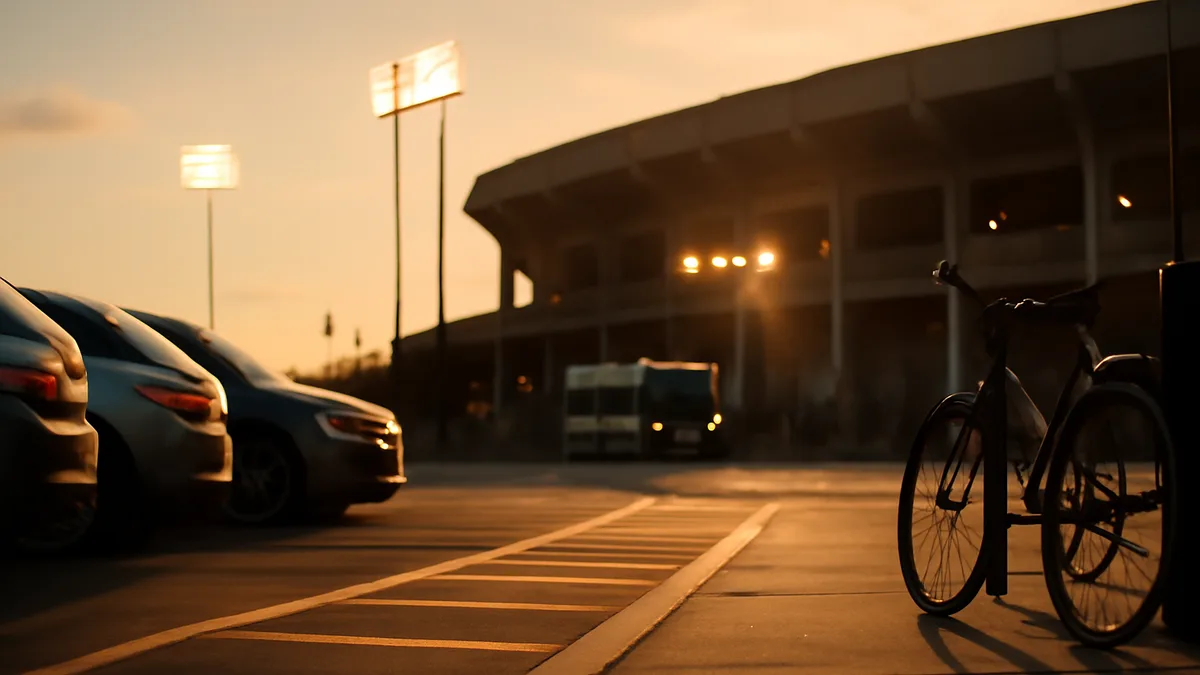
Deciding how to get to a stadium is mainly about three trade-offs: predictability, cost and what happens after full time. Pick the option that accepts the single biggest risk for the trip — a late start, a sold-out lot, or surge pricing after the final whistle.
This guide lists the practical checks that make that choice repeatable. Follow them in order of how much they change the day: proximity and timing first, then guaranteed options like reserved parking and transit passes, then flexible options such as rideshare and walking routes.
How to decide
Start by fixing two facts: the planned arrival time and how important a predictable return is. If arriving early for tailgating or a pre-game meeting is the priority, options that favour guaranteed parking or a reserved spot rank higher. If the priority is avoiding long waits after the game, choose options that reduce exposure to surge demand or crowded exits — for example, a short walk or a scheduled park-and-ride shuttle rather than an on-demand rideshare.
Next, map the local constraints: official stadium lots, nearest transit lines, where rideshare drivers can legally pick up, and any pedestrian chokepoints. Municipal websites and the stadium’s official transport pages give legal pick-up points and shuttle stops; a single wrong assumption about where a driver may wait will cost time and money on departure.
Where people go wrong
Most avoidable mistakes come from treating arrival and departure as the same problem. Traffic and demand are not symmetric — routes that are fine before kickoff can be gridlocked after full time. Another common error is failing to factor in queue time: bag checks, turnstiles and stadium security can add 15–45 minutes to entering or leaving. Finally, relying on a single app without a backup (transit schedule, stadium shuttle, or a walking route) turns minor delays into major ones.
Proximity and timing
Choose the closest feasible option for the arrival window. If the event starts early and arriving late is acceptable, a longer transit or rideshare option can be cheaper; for strict arrival times, favour driving to a reserved spot or a rail line with frequent service. Always convert scheduled start time into door time by adding security and entry queues so the chosen mode matches the required arrival minute.
Parking strategy
Decide between reserved and on-the-day parking before leaving. Reserved parking guarantees a space and removes the search-time variable, which can be worth the premium for tight schedules; unreserved lots remain an option for late callers but carry a risk of long queues to exit after the game. Also check whether the lot uses separate exits or staged release — some stadiums open lots gradually to reduce congestion.
Public transit choice
Prioritise rail or dedicated bus corridors over mixed-traffic routes. Trains and busways with their own right-of-way avoid most local congestion and provide the most reliable door-to-door time. Confirm last-return times and event-specific service boosts: high-frequency lines reduce boarding delay, but if the last train leaves before the stadium empties, the return plan must include an alternative.
Transit passes
Buy a multi-ride or day pass when it reduces friction and cost uncertainty. A transit pass removes the need to buy multiple single fares and speeds boarding at busy stops, which matters more when lines are long. Verify whether the pass covers event shuttles or special lines; some stadium shuttles require a separate ticket even if the local system’s day pass looks suitable.
Park-and-ride
Use park-and-ride when a direct drive to the stadium means long queues but a nearby lot plus shuttle reduces total time. Park-and-ride moves the bottleneck off-site and hands the congested portion to a frequent shuttle, which often has priority lanes. Confirm shuttle frequency and the distance from shuttle stop to stadium entrances: an infrequent shuttle with a long walk may cost more time than driving to a lot.
Rideshare and surge management
Reserve a rideshare only if the pick-up and drop-off rules are clear and surge risk is acceptable. Rideshare is flexible for arrival, but many cities see sharp price surges after the final whistle when demand spikes and driver supply is constrained. To reduce exposure, set a pre-booked return with a fixed pickup window where available, or plan to walk a short distance to a less congested pickup point.
Walking and pedestrian routes
Choose walking when the stadium sits within a predictable, short radius and pedestrian flows are safe. Walking removes variable costs and avoids exit choke points for vehicles, and it often provides the surest post-match escape. Plan routes that use wider sidewalks, dedicated pedestrian bridges, and official crossings to avoid bottlenecks and interactions with traffic.
Matchday packing checklist
- Tickets and ID: Carry printed or app tickets and photo ID in an accessible pocket to speed entry.
- Transit essentials: Store a transit pass or reload cash value on an account before leaving, plus a backup payment method for shuttles.
- Exit plan: Note at least two departure options — one that prioritises speed and one that prioritises cost.
- Communication: Share a meeting point and ETA with companions in case phone signals are poor.
Table: quick comparison of common options
| Option | Cost predictability | Convenience on arrival | After-match reliability |
|---|---|---|---|
| Drive and park | Moderate (depends on fee) | High if reserved; low if searching | Low in heavy traffic |
| Park-and-ride | High | Moderate (shuttle wait) | High if frequent shuttles |
| Public transit | High with a pass | High on frequent lines | High on extended-event service |
| Rideshare/Taxi | Low (surge risk) | High for arrival | Low to moderate, unless pre-booked |
| Walking | Very high | High within short radius | High |
What differs for a beginner and for someone experienced
A first-time visitor benefits from predictability: reserved parking, direct rail and clear walking routes. Beginners should build a margin into their schedule for entry queues and unfamiliar ticketing systems, and pick options that reduce decision points on arrival. Experienced matchgoers trade margin for convenience and cost savings: they use smaller lots, off-site pickups, timed returns and walking shortcuts to shave minutes, and they manage surge risk through pre-booking or moving to quieter pickup points.
What to do next
Before leaving, lock in whichever option ranks highest for the single biggest matchday risk identified earlier. Buy any necessary passes, reserve parking or a shuttle spot, screenshot maps for walking routes and note the legal rideshare zones. Finally, save a secondary option in the phone in case a schedule change or unexpected delay makes the primary plan unusable.
Frequently asked questions
Is park-and-ride worth it for big events?
Park-and-ride is worth it when driving directly to the stadium means long queues or restricted exits. It shifts the congested portion to a scheduled shuttle and usually improves after-match reliability, provided shuttles run frequently.
When should a transit pass be purchased?
Buy a transit pass when it covers both legs of the trip and speeds boarding at busy stops. A pass reduces fare uncertainty and often saves time when trains or buses are running at high frequency.
How to avoid rideshare surge after full time?
Avoid surge by pre-booking a return where the service allows a fixed pickup window, walking to a less crowded pickup point, or using scheduled shuttles or rail lines instead of on-demand rides immediately after the match.


