




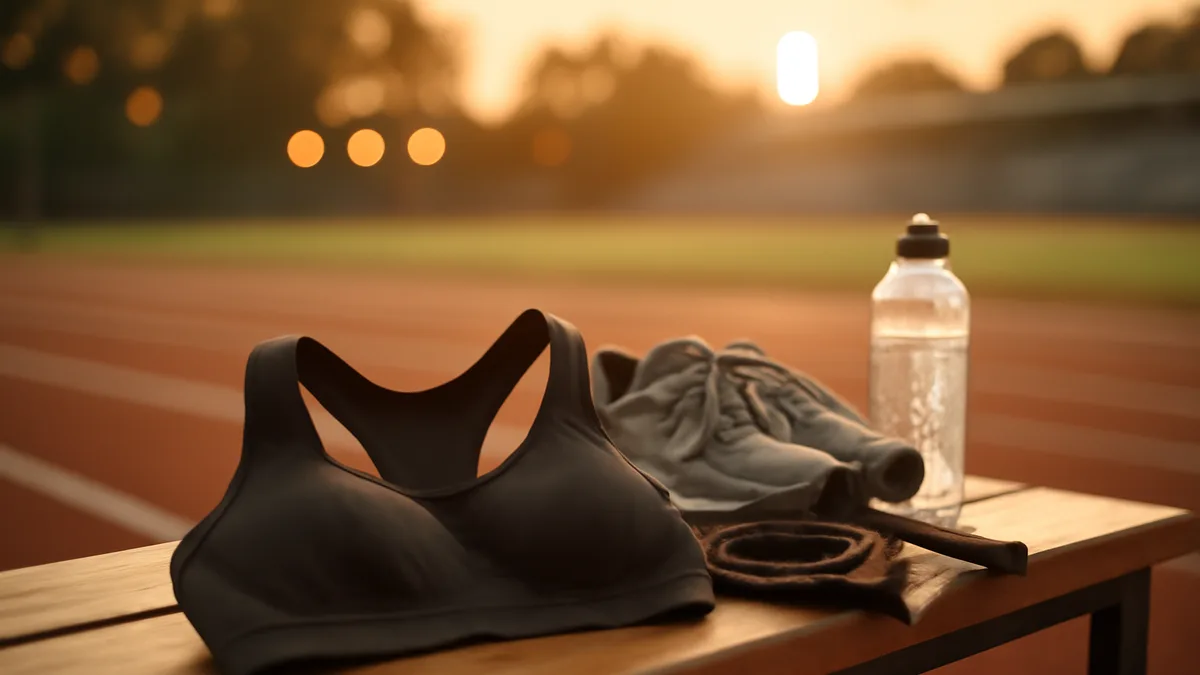
Choosing a sports bra for high-impact activity turns on two questions: how much motion needs controlling, and what fit works with the athlete’s body and equipment. High-impact sport means running, court sports, HIIT and anything with repeated vertical or multidirectional forces; that level of load makes support type, correct fit and replacement timing the crucial decisions.
How to decide before shopping
Decide what matters most: maximum reduction of vertical bounce, freedom for full rotation of the torso, or a balance of compression and separation. Think about the clothing and kit that will be worn over or under the bra, the typical session length, and whether chest sensitivity or previous discomfort is a factor. If any medical issue exists — persistent pain, chafing that breaks skin, or post-surgery considerations — consult a clinician before buying.
The priority checklist (ordered by importance)
Support type
Choose the construction that matches the motion to be controlled. Encapsulation (individual cups) separates and supports each breast and works better for larger cups and asymmetric size, while compression presses the whole breast to the chest and suits smaller-cup athletes and high-speed forward motion. A hybrid, often called compression-plus-encapsulation, combines both approaches and is the safest starting point for unpredictable, multi-directional sports.
Correct sizing and cup fit
Fit begins with an accurate band and cup measurement and ends with freedom from quad-boob, side spillage and underband ride-up. The band should sit firm and level around the ribcage; the cups should contain the whole breast tissue without overflow or significant gaps. Sizing systems vary by brand, so expect to try more than one size or cut; if the band feels too tight but the cups fit, try a larger band with a smaller cup where the brand offers it.
Strap design and adjustability
Straps move load away from the band and control vertical movement; wider, padded straps distribute pressure and reduce shoulder pain on long sessions. Adjustable straps let an athlete tune lift and close the gap between underband and chest, while racerback or cross-back designs improve stability in many running and court movements. For larger sizes, a fixed, non-stretch strap is often more supportive than a fully elastic one.
Underband stability
The underband is the primary source of support; it must be firm without cutting into the ribs. A wide, non-roll underband resists upward migration during repeats and provides a stable platform for the rest of the bra. Avoid underbands that rely mainly on elastic or a thin strip of material when the sport produces repeated vertical shocks.
Material and construction
Choose fabrics that manage moisture and keep compression consistent when wet: high-performance synthetic blends wick sweat and retain shape, while cotton mixes can feel softer but sag when damp. Seams and paneling determine how pressure is distributed and where friction will occur; flat seams and bonded edges reduce chafing against the skin during long runs or interval sessions.
Coverage and neckline
Higher coverage prevents downward or sideward movement when landing and is particularly important during plyometrics and hard braking in court sports. Low-cut styles offer more freedom under low-neck kit but give up containment around the upper pole. Choose the neckline to match the outer layers and the sport’s typical arm positions—high coverage for repetitive forward motion, moderate for mixed-direction training.
Fastenings and entry system
Front- or back-fastening models make it easier to put on and adjust a tight, high-support bra; pullover styles can compress more uniformly but are harder to fit without trying. Hook-and-eye closures allow micro-adjustment of the band over time, which helps when the elastic relaxes. Consider the practicalities of changing at a gym or during a running event when picking an entry system.
Longevity and replacement interval
Expect the elastic and compression properties to decline with repeated washing and high-intensity use; many athletes need to replace high-support bras more frequently than daily underwear. Replace sooner when the band stretches, straps lose tension, or the material no longer returns to shape after heavy sessions. Keep a rotation of two to three bras to let each garment recover and extend usable life.
Effect on performance
The right bra reduces vertical and lateral breast motion, which lowers discomfort, conserves energy and can improve running economy by removing the need to stabilise the chest with the upper body. Overly constrictive garments, however, reduce breathing space and shoulder mobility; if breathing feels restricted or shoulders are tight, the fit is too aggressive for sustained high-intensity work. Balance containment with freedom to maintain sprinting posture and full arm drive.
Common buying mistakes
- Relying on size labels: Sizes vary widely between brands, so treat the labelled size as a starting point rather than a guarantee.
- Picking by look alone: A fashionable low-cut or thin-strap model may be unsuitable for repeated vertical impact despite appealing design.
- Buying without testing movement: Static fitting misses how the bra behaves in the first minutes of a run or during quick direction changes.
Table: comparing support constructions
| Construction | Support characteristic | Best for | Trade-offs |
|---|---|---|---|
| Compression | Presses tissue flat against the chest for uniform control | Smaller cups, forward-motion activities | Can restrict breathing and uncomfortable for larger cup sizes |
| Encapsulation | Individual cups that lift and separate each breast | Larger cups, asymmetric breasts, multi-directional sport | More complex fit; can shift if cup size is wrong |
| Compression + Encapsulation | Combines containment and individual support for reduced motion | All-round high-impact use and mixed-direction workouts | Heavier and sometimes hotter than single-method designs |
What differs for a beginner and for an experienced athlete
Beginners should prioritise a forgiving fit and a hybrid support type to reduce trial-and-error risk and avoid early-season pain that can stop training. An experienced athlete can afford to chase a more technical cut that exactly matches their movement profile and kit, and will usually keep a rotation of bras for different sessions: a maximal containment piece for long runs and a lighter, more breathable option for tempo or gym sessions. Experience also helps identify subtle signs of failure in a bra before it becomes a problem during a race or key training session.
What to do next
Measure band and cup, then try at least two different constructions in those measurements: an encapsulation, a compression and a hybrid if available. Test each candidate with short bursts of the sport-specific motion—jog, skip, quick changes of direction—and assess whether the fit permits full breathing and arm drive while containing movement. Buy at least two high-support bras to rotate them; mark the purchase date and watch for changes in band tension or seam deformation as the signal to replace.
Frequently asked questions
How often should a sports bra be replaced?
Replace a high-support sports bra when the band or straps visibly stretch, the garment no longer returns to shape after washing, or the containment feels reduced during activity. Frequency depends on usage and care; athletes who train hard and wash frequently will need to replace sooner than casual users.
Does breast size change the recommended support type?
Yes. Larger cup sizes usually benefit from encapsulation or hybrid designs that separate and lift each breast, while smaller cups can be well served by compression models. Asymmetry commonly favours encapsulation because it lets each side get a tailored fit.
Can a sports bra improve athletic performance?
A correctly fitted, high-support bra reduces unnecessary breast motion that otherwise wastes energy and alters running mechanics, which can improve comfort and economy. However, an overly tight or poorly shaped bra can restrict breathing or shoulder movement and harm performance instead.


