




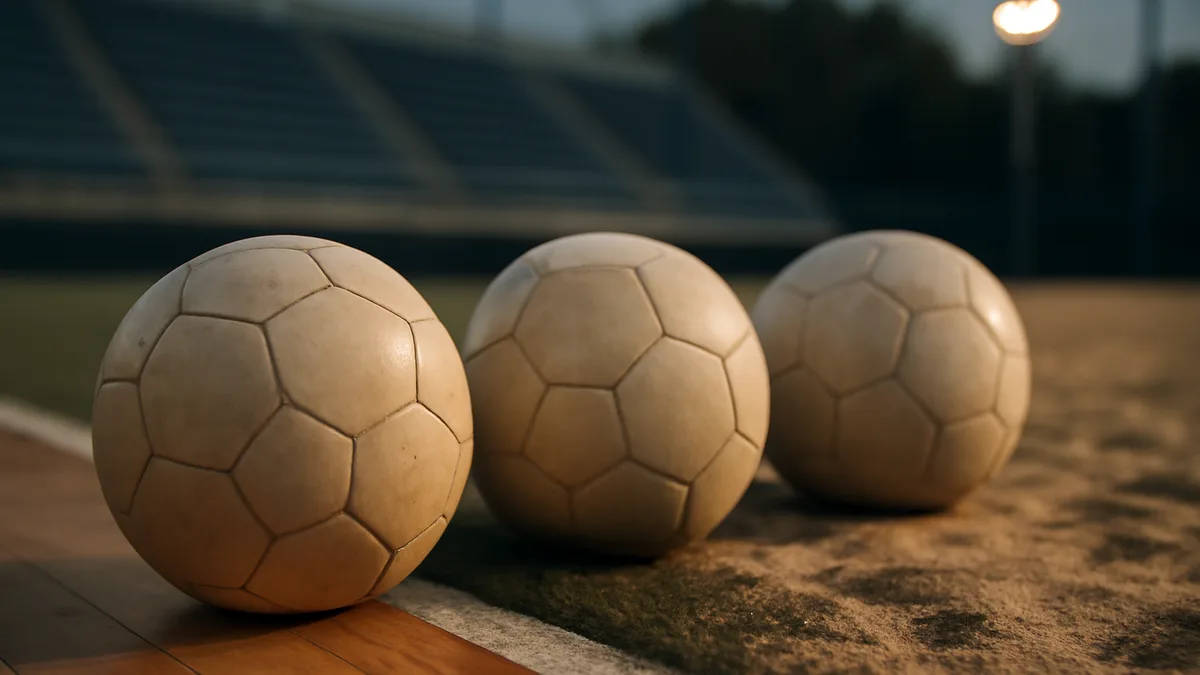
Buying a ball for small-sided football is a practical decision about surface and session length, not brand loyalty. Bounce behaviour and cover abrasion determine whether a ball feels right on an indoor court, bounces wildly on turf or stops in sand.
This guide explains the technical priorities for three distinct environments and gives a clear sequence of six checks that decide which ball to buy. It names the stable product characteristics teams and coaches use when they pick a ball for training or match play.
How to decide before the shopping starts
Begin by matching the ball to where it will be used most. Indoor courts, artificial turf and sand each stress a ball in different ways. Indoor floors reward a slow, predictable bounce and soft touch; turf needs a ball that resists cut and seam wear while keeping a firm, consistent roll; sand needs a light-feeling ball that won’t bite into the surface and that survives abrasive grains. After surface, decide whether the ball will be used for short, intense training sessions or long, frequent use: abrasion resistance and stitch construction matter more the longer a ball stays in use.
Also set a priority between control and durability. A ball built for low rebound and precise passing will usually sacrifice abrasion-resistant materials. Conversely, a heavily reinforced outer will last longer on turf or sand but can feel firmer on the foot and less responsive in tight passing play. Knowing which of those two matters more makes the rest of the choices straightforward.
Key buying priorities: a ranked checklist
The following sequence is ordered by how often each factor changes the performance you notice in play. Each heading is a single, standalone decision point.
Cover material and abrasion resistance
Choose a cover made to resist abrasion for turf or beach use, or a softer cover for indoor play. Synthetic leathers with reinforced coatings hold up better against artificial turf fibres and sand; thermoplastic polyurethane (TPU) or laminated microfibre covers are commonly used for lower-rebound indoor balls because they can be manufactured with precise seam construction. If durability is the priority, look for thicker outer layers and reinforced seams; if touch and grip matter most, accept a softer, less abrasion-proof cover.
Bounce control (rebound)
Pick a ball with intentionally reduced rebound for indoor courts and a standard rebound for turf. Indoor-specific balls are engineered to limit vertical bounce so that dribbling and first touches are predictable on laminate or wooden floors. Turf play tolerates higher rebound—players expect a livelier roll—but extreme bounce on hard artificial surfaces can make control harder. Beach play usually needs lower rebound again, to prevent the ball from skimming or bouncing unpredictably on uneven sand.
Weight and inflation standards
Match the ball’s official weight range and inflation recommendation to the intended use. Heavier or more firmly inflated balls travel faster and can be driven longer passes on turf, while slightly lighter or lower-pressure balls suit close control indoors and on sand because they sit down quicker on the surface. Follow the manufacturer’s inflation guidance for each surface: some balls are designed to be slightly underinflated for better touch on low-rebound surfaces.
Stitching and panel construction
Decide between stitched, thermally bonded or machine-stitched panels based on durability and feel. Thermally bonded panels give a smooth, consistent surface and resist seam wear; stitched panels can offer a different touch and can be repaired more easily if damaged. For heavy turf or beach training, bonded construction often lasts longer. For players who prioritise first touch and feedback, traditionally stitched panels may be preferable.
Grip and surface texture
Choose a textured surface for grip on wet or sandy conditions and a smoother finish for calm indoor play. Raised texture or micro-patterns help the ball shed water and sand and improve contact in wet turf or beach sessions. On indoor courts, a very textured ball can feel grabby; a smoother, microfibre finish delivers cleaner slide and more predictable passing.
Visibility and panel colour
Pick high-contrast panels for low-light or dusty environments and subtler colour for indoor matches where glare can be a problem. Visibility is a practical safety and performance feature: a bright, contrasting pattern helps players pick up the ball quickly in high-speed play or when sand or turf throws up dust. For formal indoor matches where attention to aesthetics matters, choose a design that doesn’t cause visual strobing under artificial lighting.
Repairability and service life
Consider whether the ball can be repaired or retreated and how often it will need replacement. Balls with standard valve fittings and stitched seams tend to be easier to patch and re-inflate. If a ball will be subjected to daily training on harsh turf or frequent beach sessions, prefer constructions that allow patch repair or seamless replacement of the bladder rather than bespoke sealed units that are disposable.
Quick comparison table: how the three ball types differ
| Ball type | Bounce control | Weight feel | Cover abrasion | Intended surface |
|---|---|---|---|---|
| Futsal | Low rebound for predictable touches | Moderately light for quick control | Lower abrasion resistance; designed for smooth floors | Indoor courts |
| Turf | Standard rebound for roll and pass | Heavier feel for longer travel | High abrasion resistance against fibres and grit | Artificial turf |
| Beach | Low rebound to settle in sand | Light, easy to control in soft sand | High abrasion resistance against grainy sand | Sand and beach |
Where buyers commonly go wrong
Buyers often assume one ball will work everywhere. That is the single most common mistake. A ball engineered to limit rebound on an indoor court will feel dead and slow on turf; a turf ball with a tough polyurethane skin will feel hard and ballistic on laminate floors. Another frequent error is ignoring how a ball ages: abrasion wears panels thin, seams open, and a once-low-rebound ball can become unpredictable. Finally, many buyers focus on visual design or brand alone and neglect the specified inflation and surface guidance from the maker—those are the rules that keep the ball performing as intended.
Simple habits reduce costly mistakes: buy by surface first, ask the supplier for the recommended inflation pressure for that surface, and keep a dedicated ball for each type of training rather than rotating the same ball across turf, sand and court.
Beginner versus experienced priorities
Beginners should prioritise control and durability. A low-rebound indoor ball with a forgiving cover helps new players learn passing and first touch without a ball that hops away. Durability matters because inexperienced play generates scuffs and hard impacts. Coaches and group sessions benefit from balls that retain predictable behaviour for months rather than days.
Experienced players often prioritise feedback and specialised feel. They may accept a less durable cover in return for a softer touch or a ball that allows more precise spin. Advanced users also notice subtle differences in seam shape and panel geometry; these matter most in finishing and quick, one-touch play. Experienced players will often keep distinct balls for match-type practice and for intensive conditioning to protect the match-feel ball.
What to do next
Decide the surface most used and the single performance trait that matters most: control, durability or travel. Choose a ball whose materials and construction are described in those terms rather than by model name. If buying for a club, order at least two types and keep one dedicated ball for each surface. For individual buyers, a second, cheaper training ball for rough sessions protects the better match-feel ball.
Finally, maintain correct inflation and inspect covers for abrasion after heavy sessions. Replacing balls before seams fail preserves predictable play and saves money over time.
Frequently asked questions
Which ball type for indoor futsal courts?
Choose a ball engineered for low rebound and a soft touch. Those balls are made to control vertical bounce on hard indoor floors and improve first-touch play.
Can a turf ball be used on sand?
A turf ball will be durable but usually feels heavy and can sit awkwardly in sand; beach balls are lighter and designed to settle on sand, so they perform better for sand play.
How often should I replace a training ball?
Replace when the cover shows clear abrasion, seams open or the ball loses predictable rebound. Heavy turf and beach use shortens service life, so inspect balls frequently and rotate dedicated training units.


