




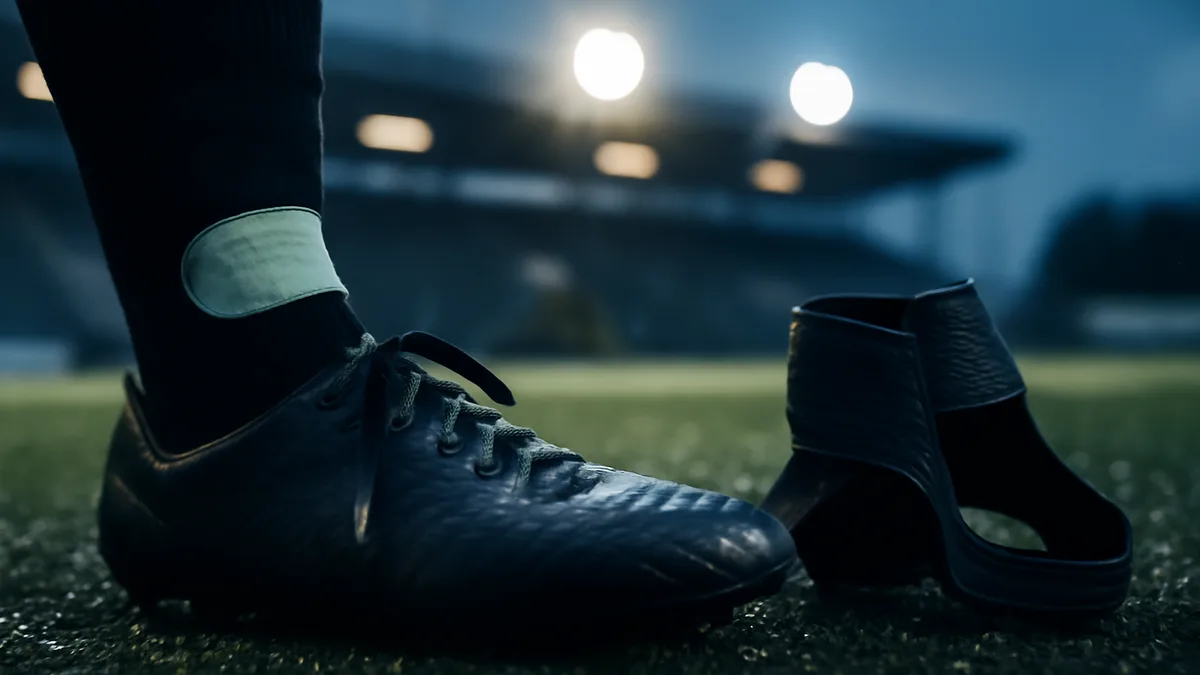
Ankle support choices turn on three things: the type of sport, the current state of the ankle (healthy, recovering, unstable) and how long a support must stay effective in play. Taping and bracing both reduce dangerous motion; they differ in durability, consistency and how they change the way the ankle moves.
This guide gives a clear, ordered checklist for choosing support. It explains what neither method will do, why clinicians choose one over the other, and the practical trade-offs that matter when spending on kit, trips or subscriptions.
How clinicians decide
Physiotherapists and team clinicians weigh objective findings and context. On examination they look for ligament laxity, repeated sprains, swelling and persistent pain. They then factor in timing (immediate return vs long-term protection), sport demands (cutting, jumping, contact) and athlete preference — because compliance is essential for any support to work.
When evidence favours intervention, a physio chooses the simplest effective option. That can mean taping for a single game, a lace-up brace for weeks of rehabilitation, or a rigid brace when instability is clear and recurrence risk is high.
Seven priority checks when buying support
Fit and sizing
Correct fit is the single most important factor. A support that is too loose does not limit harmful inversion, and one that is too tight impairs circulation and performance. Try the support with the footwear and socks intended for use; sizing charts from manufacturers are helpful but always check feel during movement.
Type of restriction
Decide what movement needs limiting. Taping and lace-up braces mainly control inversion and excessive frontal-plane motion. Rigid, hinged braces can also limit sagittal-plane extremes. Sleeves and neoprene supports provide compression and proprioceptive feedback but offer minimal mechanical restraint.
Durability and consistency
Taping gives firm mechanical support immediately but loses effectiveness as adhesive and tension degrade with sweat and during long matches. Braces deliver consistent restraint over time and are reusable, so they suit multi-day tournaments or training blocks.
Skin, sweat and hygiene
Consider skin sensitivity and hygiene. Repeated taping can cause irritation and blistering for some athletes; reusable braces can harbour odour unless washed regularly. For fragile skin or allergy to adhesives, a brace or a low-allergy tape option is the safer baseline choice.
Practicality during travel
For trips, a brace reduces dependency on specialised tapers and adhesive supplies, which makes it the simpler logistics choice. Taping requires tape, scissors and someone confident applying it under time pressure, so budget travel plans should factor in either portable supplies or lining up taping services.
Sport demands
Match the support to the sport rather than the image. Contact sports and sports with repeated cutting demand more mechanical restraint; distance running and low-impact sessions may benefit more from compression and proprioceptive sleeves. The expected pattern of loads determines the needed restriction.
Return-to-play phase
Stage of recovery dictates choice: acute protection to reduce re-injury risk often starts with taping or a rigid brace; later phases emphasise neuromuscular control where lighter supports and targeted rehab matter more. A physio will progressively reduce mechanical reliance as strength and proprioception recover.
Common options compared
| Option | Primary function | Best for | Reusability |
|---|---|---|---|
| Taping (athletic tape) | Immediate mechanical restriction of inversion | Single games or short-term protection | No |
| Lace-up brace | Consistent inversion control with adjustable fit | Rehab periods and multi-day events | Yes |
| Hinged/rigid brace | Strong mechanical limit across planes | Marked instability or return-to-play after serious sprain | Yes |
| Compression sleeve (neoprene) | Compression and proprioceptive feedback | Low-level support, maintenance, warm-up | Yes |
Where people go wrong
Three mistakes account for most poor outcomes. First, choosing support for looks rather than function; aesthetics do not protect the joint. Second, over-relying on passive support while neglecting strength, balance and movement retraining — braces and tape are adjuncts to rehabilitation, not substitutes. Third, failing to reassess: what was appropriate immediately after injury may be wrong two or three weeks later.
Quick practical checklist
- Match the restriction: pick the support that limits the motion that caused injury, not the one with the strongest strap.
- Plan logistics: if travelling, prefer reusable braces unless a qualified taper is available for every match.
- Check skin: test tape or brace in training before using it in competition to spot irritation.
- Blend with rehab: combine any support with progressive strength and balance work directed by a clinician.
Brands and typical properties
Certain product lines are known for steady characteristics. Lace-up systems from established manufacturers are consistently chosen for adjustable mechanical control; neoprene sleeves from legacy sports brands are repeatedly used where compression and warmth matter; and low-profile, sport-specific lace-up braces have a long record of combining fit with moderate restriction. Examples on team benches often include lace-up braces for weeks of play and neoprene sleeves for training.
When a brand is named it is because that line is repeatedly used for the stated property rather than any single model. Prefer the property (lace-up, neoprene sleeve, hinged) over a model number when making a purchase decision.
What to do next
If there is no recent injury and the goal is prevention: trial a sleeve in training, then step up to a lace-up brace for high-risk sessions or tournaments. If returning from a sprain: follow a physio assessment, expect a staged plan combining temporary taping or a rigid brace with progressive rehab, and schedule re-evaluation before dropping mechanical support.
For travel and purchases, pack one reusable lace-up brace and a sleeve as the baseline. Arrange a tape kit or a clinician only if the event is short and the expected load justifies the extra supply and skill needed to apply tape effectively.
See NHS ankle sprain guidance.
The American Academy of Orthopaedic Surgeons notes ankle braces as part of conservative management options.
Frequently asked questions
When is taping better than a brace?
Taping is often preferred for short-term, immediate protection such as a single match or when a clinician needs very specific directional restriction. It provides strong mechanical control at first but loses effectiveness with sweat and long play, so it suits isolated events rather than extended tournament use.
Can ankle support stop future sprains?
Support reduces the risk of specific inversion or eversion events while worn, but it cannot eliminate sprains entirely or replace rehabilitation. Long-term prevention depends on restoring strength, balance and movement patterns; supports should be an adjunct to that work.
How do clinicians choose between brace types?
Clinicians match the brace’s mechanical profile to the injury: lace-up braces for adjustable inversion control, hinged or rigid braces when instability is clear, and sleeves for compression and proprioception. The choice also factors in timing, sport demands and athlete adherence.


