




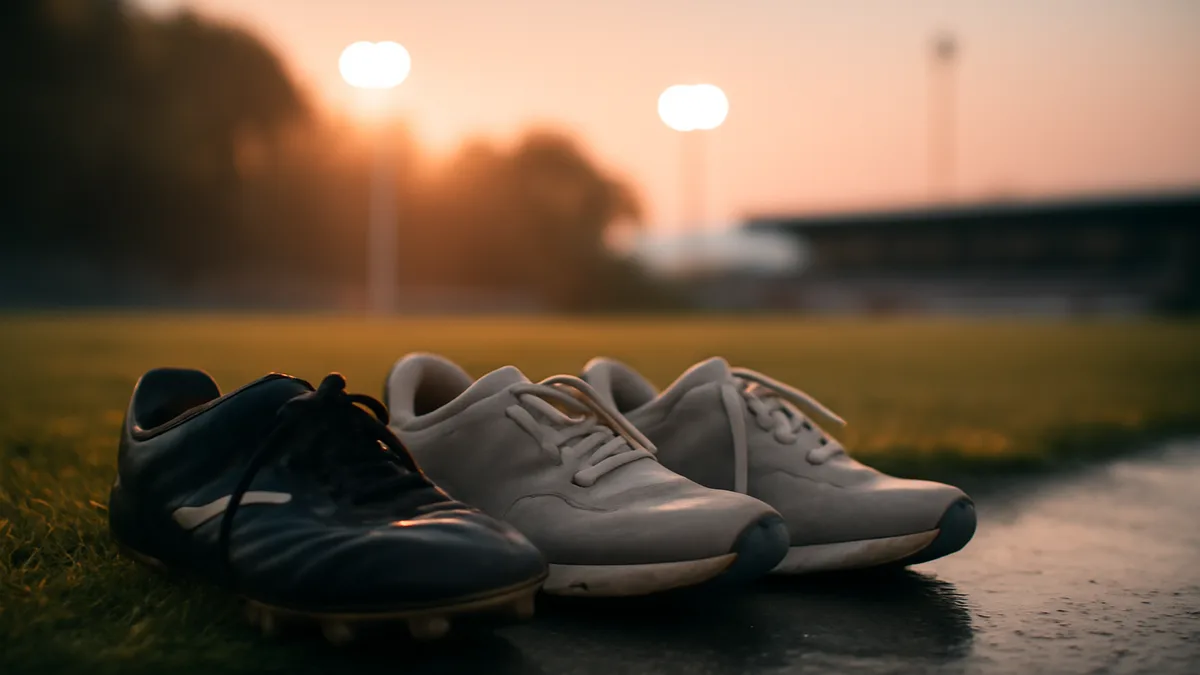
Choosing running shoes as a footballer comes down to three questions: where will the mileage happen, how much cushion and stability the legs already get from pitch work, and how often the shoes will be alternated with boots or gym trainers. A sensible choice reduces load on joints and keeps conditioning work effective without changing running mechanics.
This guide lists the priorities in the order they matter for most players. Each point stands alone so a quick scan gives the actionable answer required before spending money.
How to decide
Decide first whether runs are mostly on road, track, treadmill or mixed surfaces. Next, note recent pitch minutes and recovery windows: players with heavy match loads need more cushion between sessions. Finally, plan for rotation: a second pair cuts the risk of overloading feet and joints. Buying should start from that practical plan, not from brand marketing.
Priority checklist
Surface: match the sole to where you run
Choose the shoe category by surface first. Road trainers are optimised for tarmac and have flatter, smoother outsoles with firmer foam; they suit most club runs and treadmill sessions. Trail shoes add lugged rubber and protective toe bumpers for hard-packed trails. A hybrid or cross‑trainer is sensible if routes mix grass paths, cycle lanes and hard ground. The wrong outsole increases slip or accelerates wear.
Cushioning level: add cushion if pitch work is heavy
Pick cushioning relative to weekly pitch load. Players doing heavy match minutes or frequent high‑intensity sessions benefit from more midsole volume to reduce accumulated impact on knees and hips. Lighter cushion favours players who run to sharpen speed and want clearer ground feel. Brands are known for consistent traits: Hoka lines are widely recognised for high-stack cushioning and New Balance and Adidas offer a range from firm to soft; use that history as a starting point, not a rule.
Support and stability: natural foot or corrective need
Decide whether stability features are necessary. Neutral trainers suit runners without overpronation; stability trainers add medial support or firmer foam to limit inward roll. Players with prior ankle or knee injuries or who pronate substantially should consider a stability option. Do not pick maximal support if gait is neutral — it can interfere with natural foot mechanics on the pitch.
Fit and last: width, heel lockdown and toe room
Fit matters more than brand names. Look for secure heel lockdown to stop slippage, a last that matches foot width (Puma King and classic lines are examples of wider lasts historically, while some Nike models run narrow), and a thumb‑width of toe room to accommodate swelling. Comfort on a short walk is a reliable predictor of comfort on a 5–10 km conditioning run.
Weight and responsiveness: trade-offs for speed work
Choose lighter, more responsive trainers for interval and tempo sessions because they preserve leg turnover. Heavier, more cushioned shoes are better for long aerobic miles. If the training calendar mixes both, either accept a compromise or plan a dedicated lightweight pair for speed days while reserving cushioned shoes for recovery runs.
Durability and construction: upper and outsole matter
Evaluate the upper and outsole for durability. Woven mesh uppers improve breathability but can abrade if used frequently on rough trails; reinforced uppers or welded overlays last longer under repeated lacing tension typical for players. A carbon or plate in the midsole adds propulsion but may reduce flex; choose it only if it complements the sessions intended for that pair.
Rotation strategy: why two pairs beat one
Rotate at least two pairs when possible. Rotation lets cushioning recover between runs, reduces continuous loading of the same structures, and often prolongs lifespan. Use cushioned shoes for easy runs and heavier pitch weeks, and switch to lighter trainers for targeted speed or tempo sessions. A third cheap gym trainer is useful for strength work so the running shoes are preserved for running only.
Common mistakes players make
Players often pick running shoes by looks or because a clubmate recommended them without matching surface or training purpose. Another frequent error is matching running shoe cushioning exactly to boot cushioning; football boots are low profile and that means the run shoe should provide the missing shock attenuation, not replicate the boot. Finally, many wait too long to replace shoes; visible wear, loss of midsole spring, or persistent aches after runs are signs that a shoe has passed its functional life.
What differs for a beginner versus an experienced runner
Beginners should prioritise cushioning and fit to reduce injury risk while building volume, and they should start with easy, low‑intensity runs in a cushioned road trainer. Experienced runners can afford more specific choices: a stability or carbon‑plate shoe for targeted sessions, a lightweight trainer for intervals, and careful rotation to balance pitch and running fatigue. Experience also helps in recognising subtle changes in fit and cushioning that signal replacement.
Table: how the main alternatives compare
| Type | Cushioning | Best for | Typical trade‑off |
|---|---|---|---|
| Road trainer | Medium to high | Club runs, treadmill, steady miles | Less grip on loose surfaces |
| Lightweight trainer | Low to medium | Intervals, tempo, speedwork | Less long‑run comfort |
| Trail shoe | Variable (firm to high) | Off‑road runs, muddy paths | Heavier, firmer ride on tarmac |
| Maximal cushion | High | Recovery and high mileage with heavy pitch load | Reduced ground feel and agility |
When to replace running shoes
Replace shoes when cushioning flattens, heel or forefoot shows deep compression, the outsole is worn through in high‑wear zones, or persistent aches appear after runs. Shoe lifespan varies with construction and mileage; monitor ride quality rather than relying on a fixed number. Keep a usage log if training volume is high — noting session type and distance helps spot when performance declines.
What to do next
Decide the primary surface and the role the shoe must fill (recovery, tempo, mixed). Try pairs later in the day with the socks intended for running, and test them on a short run if possible. If buying one pair, favour the category that matches most runs; if buying two, split duties between cushion for easy days and a lighter trainer for speed. Finally, plan to inspect shoes monthly during heavy periods and allow a short break‑in before using a new pair on a hard session.
The phrase “running shoe” is used here to describe the cross‑training trainer chosen for mileage, and attention to rotation and fit will protect performance on the pitch while building conditioning.
Frequently asked questions
How often should footballers replace running shoes?
Replace shoes when cushioning and ride feel degrade, the outsole wears through in high‑contact zones, or new aches develop after runs. Lifespan varies with usage, so monitor performance rather than relying on a set mileage figure.
Which shoe type suits mixed‑surface runs?
Choose a hybrid or a road trainer with a more durable outsole if routes include paved sections and hard‑packed paths. If runs include significant off‑road or muddy sections, a trail shoe will offer better grip and protection.
Should players buy one pair or rotate multiple pairs?
Rotation is recommended. Use a cushioned pair for recovery and high‑volume weeks and a lighter trainer for speed and tempo sessions. A second pair allows cushion recovery and generally extends functional life.


