




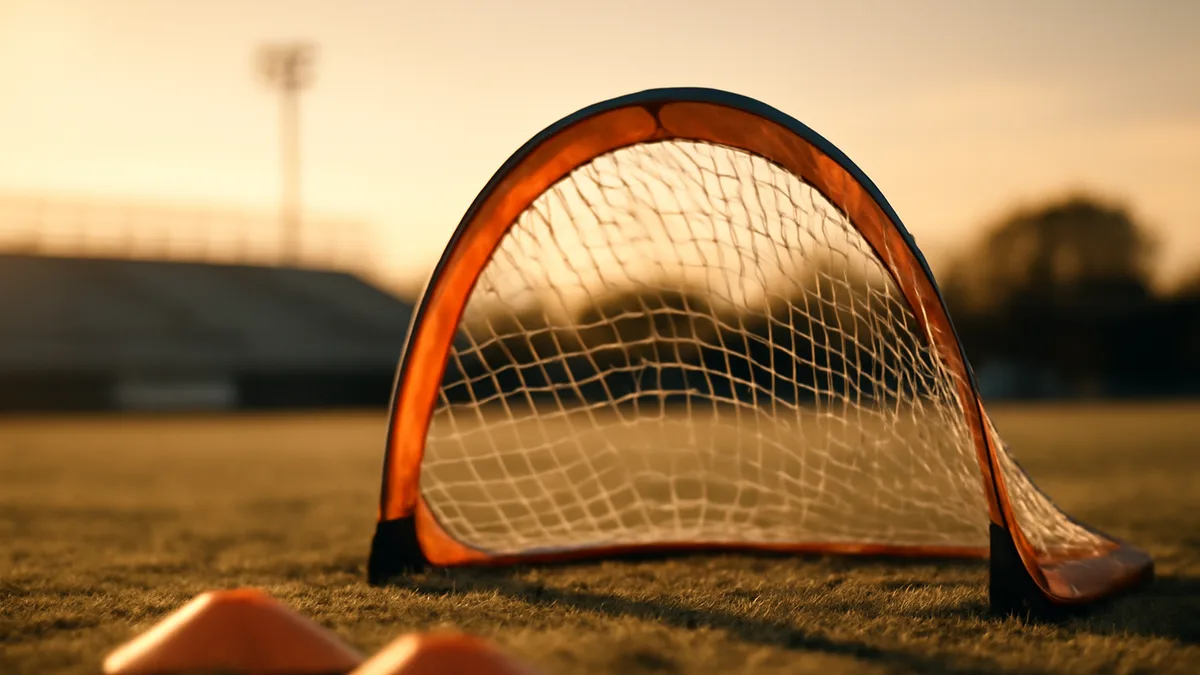
Choosing a portable goal or training net turns on three things: the players who will use it, the surfaces it will stand on, and how often it will be moved. Safety and stability are as important as portability; lightweight kits are convenient but more likely to tip or shift during play.
This guide lists the priority decisions in the order they normally matter. Read the short prose sections first if unsure, then run down the list headings; each one is a self-contained buying rule.
How to decide
Start with the use case. A coaching set used for repeated sessions on grass has different needs from a backyard pop-up used occasionally on artificial turf. Decide whether the unit must be easy for one person to carry and erect, or whether two people will move a heavier, more stable structure. Always match goal size and anchoring to the players’ age and the surface: that choice governs safety and compliance more than brand names or net weave.
Common ways people go wrong
Buyers underestimate tipping risk, assume stakes will work on every surface, or choose a net material that degrades in sun. Other frequent mistakes are accepting vague anchor recommendations from retailers and treating a product’s frame diameter as the only measure of strength. These errors matter because portable goals are involved in serious injuries when they fall over or when poorly secured frames bend and detach.
What differs for a beginner and for an experienced buyer
Beginners should prioritise clear anchoring solutions and documented safety guidance; they will get more value from a heavier, simpler frame that requires two people to move. Experienced buyers can trade a degree of stability for faster setup and lower weight if they already have reliable anchoring gear and understand maintenance—knowing which joints and net fastenings to check regularly makes lighter options safer in practice.
Key choices, in order of importance
Size by age group
Match the goal to the players first because the wrong size changes play and increases risk. Youth teams use smaller widths and heights appropriate to age brackets; adult training often uses full-size goals or smaller practice goals for finishing work. If the goal will be used across age groups, choose a size that won’t encourage dangerous play — avoid full adult goals for small children unless firmly anchored and supervised.
Frame material and strength
Choose the strongest frame that fits handling needs: steel frames offer high rigidity and resist deformation but weigh more; aluminium is lighter and resists corrosion, though tube diameter and wall thickness determine its real stiffness. Check how members connect: bolted and welded joints behave differently in impact, and the presence of reinforcement at corners and the crossbar is a major durability signal.
Anchoring and stability
Anchoring is the safety decision that most affects tipping risk. For soft ground, long ground stakes or screw anchors produce substantial holding force; on hard surfaces, weighted ballast or purpose-built sand/ballast bags are the practical solution. Temporary solutions like light pegs or thin cords reduce portability but rarely deliver the holding power needed in a full-size adult goal during a collision.
Net material and attachment
Netting varies by fibre and knot type: braided polypropylene gives good weather resistance and shock absorption, while knotted nylon tends to handle repeated high-impact shots better but can absorb water and degrade if UV protection is poor. How the net attaches matters: continuous rope hems that tie to the frame spread load; individual plastic clips concentrate force at attachment points and are common on pop-up designs.
Transportability and setup time
Decide how often the goal will be moved. Pop-up and fold-flat designs are fastest to deploy and easiest for one person to handle; frame-folded goals and sectional steel frames need more time and often two people. Consider the packing volume as well as weight — some lightweight nets compress small but still need a wide bag for long crossbars.
Pitch surface and anchoring method
Match the anchoring method to the surface rather than trusting a single accessory to work everywhere. On natural turf, screw-in anchors or long steel stakes work well; on sand or beach, longer shafts and wide flukes help; on artificial turf or indoors, use purpose-made ballast systems or weighted bases. Verify that any recommended stakes or weights are rated for the surface to avoid improvising solutions that fail under load.
Storage, weather exposure and maintenance
Consider how the kit will be stored and how often it will be exposed to sun and rain. Nets and plastic clips degrade under prolonged UV, and steel fittings can rust where salt or chlorine are present. Inspect fastenings and joints regularly and replace worn anchors or tie-offs rather than compensating with more tension, which transfers load to weaker points.
Common failure modes (and how to avoid them)
- Tip-over: Occurs when anchoring is inadequate; always choose anchors rated for the surface and add ballast for hard ground.
- Frame bend: Caused by concentrated impacts at unsupported spans; prefer reinforced corners and thicker-walled tubes for frequent use.
- Attachment failure: Net clips and ropes break first; select continuous rope hems or replace short clips with steel carabiners where possible.
Comparing common portable designs
| Design | Stability | Weight & transport | Best for |
|---|---|---|---|
| Lightweight pop-up | Low to moderate | Very light, small bag | Casual backyard use, quick drills |
| Frame-fold aluminium | Moderate | Light to moderate, sectional | Coaching sessions, clubs needing mobility |
| Welded steel portable | High | Heavy, needs two people | Regular club training, rental pitches |
What to do next
On the shortlist, check that each product lists anchoring methods and joint construction in plain language. Inspect how the net attaches and whether spare clips or ropes are supplied. Finally, prioritise a vendor or model that supplies clear safety instructions and replacement parts; a goal that can be maintained easily will be safer and cheaper to run over time.
The FIFA Laws of the Game set equipment expectations for match play, and the Consumer Product Safety Commission publishes guidance and recalls that highlight avoidable risks; consult them when buying for organised clubs or public venues.
Frequently asked questions
What size goal for youth teams?
Select a goal size matched to the age bracket used in competitions and training; smaller widths and lower heights reduce risky trajectories and accidental collisions. If a single goal must serve several ages, choose the largest size that still allows safe anchoring and supervise younger players closely.
How should I anchor a goal on artificial turf?
On artificial turf, traditional ground stakes are ineffective; use purpose-made ballast systems or heavy weighted bases designed to sit on the surface. Ensure any ballast is securely attached so it cannot shift in a collision and that the system is compatible with the turf to avoid damage.
How often should portable goals be inspected?
Inspect anchors, frame joints and net attachments before every use and perform a more thorough check weekly during heavy use periods. Replace frayed nets, bent tubes, and damaged clips immediately; small defects often precede a failure during play and are inexpensive to fix compared with the injury risk.


