




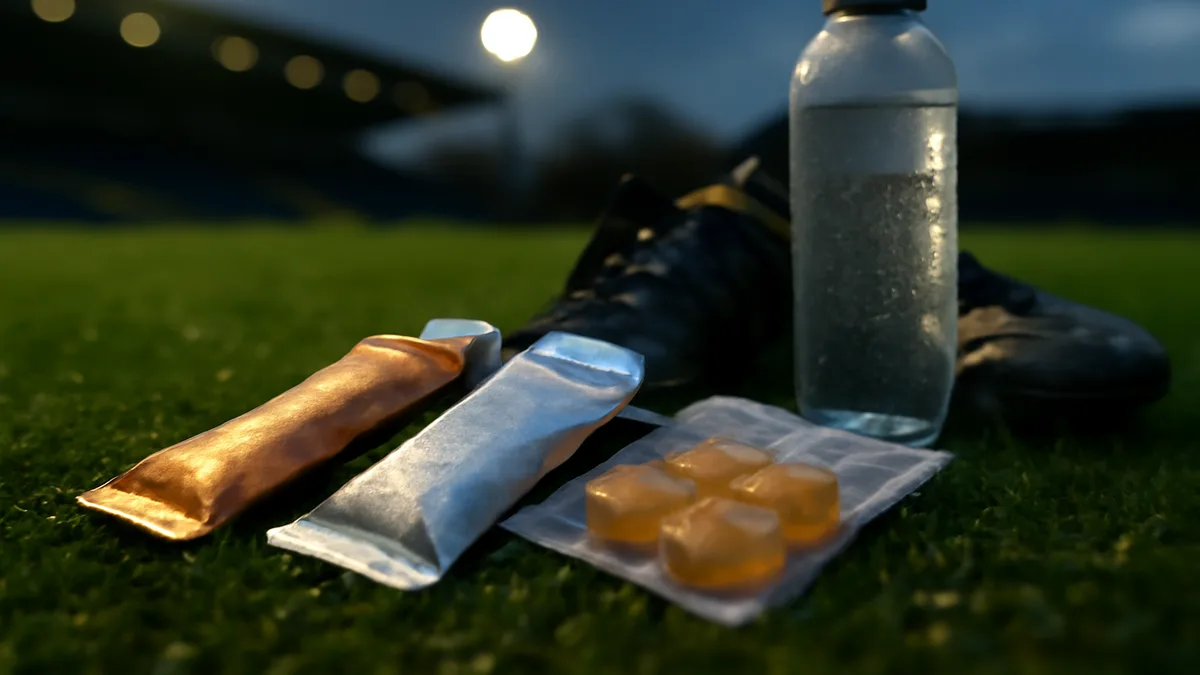
Long sessions demand steady carbohydrate. The core decision is how much digestible carbohydrate an athlete needs per hour and which format lets them take it reliably without upsetting the stomach.
This guide explains the choice steps that matter in practice: carbohydrate type and dose, gastrointestinal tolerance, timing and flavour, plus packaging and environmental factors. Each section gives one clear answer followed by actionable detail.
Key choices during long sessions
Carbohydrate target per hour
Decide first on the carbohydrate per hour target because it defines everything else. Most endurance plans require a steady supply rather than a single large bolus; that can be met with gels, chews, sports drinks or a combination depending on how concentrated the product is and how many calories are needed. Products differ in the type of sugars used (glucose, fructose, maltodextrin) and mixed-carbohydrate formulas allow higher transport rates, so match the product to the hourly goal rather than to marketing claims.
Mix of sugars (single versus multiple transportable)
Prefer a mixed-sugar formula when the session requires higher carbohydrate rates because different sugars use different intestinal transporters and can raise total uptake. Single-sugar gels work fine at lower intakes but hit an absorption ceiling sooner, which increases risk of gastrointestinal distress if tried at high doses. For long, high-intensity efforts, look for products or combinations that supply glucose (or glucose polymers) plus a second sugar such as fructose.
Rate and frequency of intake
Frequency matters as much as total grams per hour: smaller, regular doses reduce stomach load and steadier blood glucose than large intermittent boluses. Plan intakes on a clock or by distance—every 20–30 minutes is a common pattern—so the gut has time to clear the prior dose before the next. Hydration strategy interacts with this: more concentrated gels need water to be taken alongside to aid gastric emptying.
Gastrointestinal tolerance and gut training
Prioritise gut tolerance because stomach upset ruins performance more reliably than running out of fuel. Gut training means practising the same products and timing in training sessions so the intestine adapts to higher carbohydrate loads and to the specific formulation used. Start gut training in long, easy sessions and only increase dose or change product after tolerance is proven.
Form factor: gel versus chew versus drink
Match form to convenience and environment: gels are compact and predictable, chews can be easier to portion and swallow at lower intensities, drinks combine both hydration and fuel but are heavier to carry. Gels pack more carbohydrate per gram, chews are less messy and often easier to share mid-ride or run, and drinks let athletes sip continuously; pick the format that fits body position, hand access and the event’s aid-station setup.
Flavour, texture and cold-weather performance
Choose flavour and texture deliberately because palatability affects intake under fatigue and nausea. Very sweet or very sticky products become aversive over long efforts; several manufacturers offer neutral or savoury options to avoid flavour fatigue. Cold conditions change texture and ease of swallowing—some gels thicken or freeze, and chew consistency can harden—so select products proven to behave acceptably in the temperatures expected.
Packaging and environmental practicalities
Factor in packaging for the sport and the route: easy-open sachets for cycling, small bite-sized chews for running, resealable bottles for long tours. Waste management matters on group rides and races with litter rules, and some events ban single-use wrappers in favour of reusable systems. Also confirm the opening mechanism works with gloves if training in cold weather.
How to decide: a practical sequence
Start by calculating the realistic carbohydrate need for the session, then decide whether a single product can supply it or whether a mixed strategy is necessary. If the hour-by-hour target is modest, a single gel or regular sips of a drink can suffice; if the target is higher, plan a combination of mixed-sugar drink and gels or chews so absorption limits are not reached. Always run at least two full practice sessions with the chosen products: one steady-state long session to test digestion and palatability, and one higher-intensity session to check how appetite and stomach function under load.
When comparing brands, look for those with a stable reputation for the specific property sought: a line known for broad last or a glove cut is irrelevant here, but brands long associated with mixed-carbohydrate formulas or high-concentration gels are sensible starting points. Do not treat marketing claims about rapid absorption or unique blends as substitutes for on-road testing; the gut adapts to a practiced routine rather than to a new product introduced on race day.
Where people go wrong
Common failures start with over-reliance on one format without testing tolerance. Athletes frequently increase dose on race day or add a product they have never tried, which elevates the chance of cramps, bloating or vomiting. Another error is ignoring fluid: taking concentrated energy without water slows gastric emptying and increases nausea; always plan which sips accompany each gel or chew.
Timing mistakes are also frequent. Waiting until energy feels low turns the strategy reactive rather than preventive and forces larger boluses that the gut struggles to accept. Lastly, many athletes forget flavour fatigue: a product that tastes fine at the start can become intolerable two hours in, so carry a second, milder flavour or a non-sweet alternative for the latter stages.
Differences for beginners and experienced athletes
Beginners should prioritise simplicity and conservative carbohydrate rates: a modest, proven hourly target and a single trusted product reduce variables. Emphasise short practice sessions where only one variable is changed at a time: try a new flavour, then a new timing pattern, then a different carbohydrate rate. Gradual increases let the gastrointestinal system adapt without compromising a session.
Experienced athletes can push for higher carbohydrate rates and more complex strategies, such as alternating gels and chews with mixed-sugar drinks to exploit multiple transporters. They should still verify each element in training and keep a fallback plan—one product and easy-to-digest drink—available if tolerance deteriorates during an event. Experience helps predict when to switch from sweet to neutral flavours and how environmental factors affect product performance.
Table: how formats compare
| Format | Typical carbohydrate concentration | Convenience in motion | Gastrointestinal risk |
|---|---|---|---|
| Gels | High (compact dose) | Very high for cycling, good for running | Moderate if taken dry; lower with water |
| Chews | Moderate (bite-sized) | High for running, simple portioning | Lower than dense gels if chewed thoroughly |
| Sports drinks | Lower per ml but continuous | Best for continuous sipping and hydration | Lower at moderate concentrations; overload raises risk |
| Energy bars | Variable, often lower per bite | Less convenient to eat on the move | Higher if fibrous or fat-containing; slower digestion |
What to do next
Pick one simple plan and test it on two long training sessions: the first at an easy steady pace, the second including interval efforts or race-pace blocks. Record what was taken, the timing, any stomach symptoms and what helped or hindered swallowing; use that log to refine dose, timing and flavour. Keep one reliable backup product for use if taste or tolerance fails, and incorporate a short gut-training phase into the weekly schedule well before any key event.
Finally, if gastrointestinal symptoms persist despite gradual gut training and conservative dosing, consult a sports dietitian or medical professional to rule out underlying issues and to tailor a plan to the individual’s digestion and training load.
Frequently asked questions
How much carbohydrate per hour is ideal?
Targets vary with intensity and body size, but the decision is individual. Start with a conservative hourly target and test by practising in training; increase only if gut training shows tolerance to higher mixed-carbohydrate intakes.
How do I train my gut for more fuel?
Gut training means repeating the same fuel type and timing in training so the intestine adapts to higher carbohydrate loads. Begin on easy long sessions, increase dose gradually, and include one higher-intensity practice to check tolerance under stress.
When are gels or chews unnecessary?
Gels and chews are unnecessary when exercise is short or energy demands are low and can be met by pre-event carbohydrate stores. Also skip them if repeated testing shows persistent gastrointestinal problems despite conservative dosing and professional advice.


